Where Safety Flooring Is Most Commonly Used
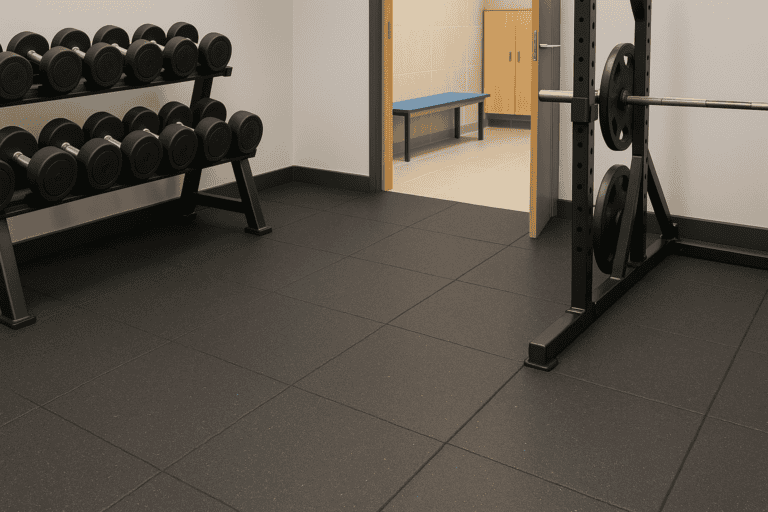
Safety flooring is essential in locations where spills, moisture, or heavy foot traffic increase the risk of slips and falls. Typical installations include:
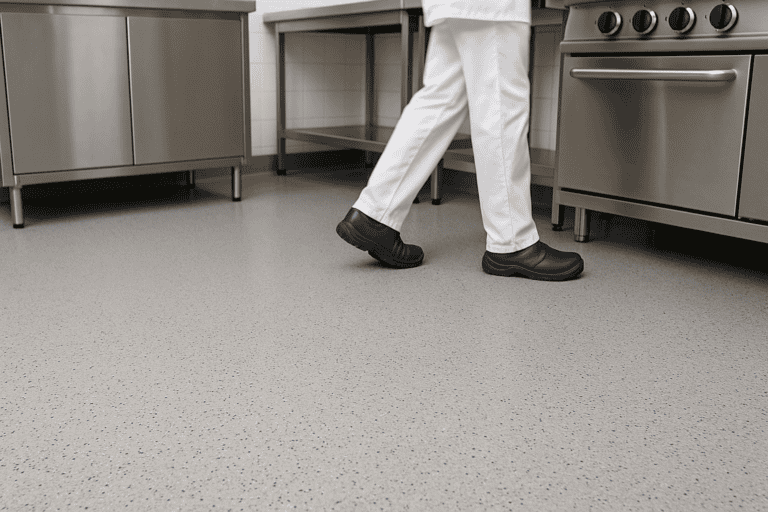
These environments demand flooring that is hygienic, hard-wearing, and easy to maintain, while still providing reliable grip underfoot.
Site Survey & Compliance Checks
We begin with a detailed assessment of your space, usage requirements, and any relevant health and safety standards. This ensures the correct flooring specification is chosen for slip resistance, durability, and hygiene.
Subfloor Preparation & Smoothing
Safety flooring must be laid on a perfectly prepared surface. We repair imperfections, apply smoothing compounds where needed, and make sure the subfloor is clean, dry, and level before installation begins.
Professional Laying & Heat Welding
Sheets are accurately cut and fitted, then joints are heat-welded to create a sealed, watertight surface. This prevents dirt and bacteria from entering seams and improves long-term durability.
Coving, Cap & Finishing Details
Where required, we install coved skirting and finishing trims to create smooth wall-to-floor transitions — essential for hygiene-critical environments such as healthcare and food preparation areas.
Final Inspection & Handover
Before completion, we check adhesion, weld integrity, and overall finish to ensure the floor meets professional and safety standards.
With correct installation and regular maintenance, commercial safety flooring can last 10–20 years or more, even in high-traffic environments.