Many homeowners ask whether a new floor can sit on top of an existing surface, rather than removing the old one. In many cases, the answer is yes, but the result depends on the condition, level, and stability of the current floor. Moisture, movement, and uneven areas can cause problems if they remain untreated. Understanding the subfloor, the chosen flooring type, and the room use helps you judge what preparation is required.
Key takeaways
- Many floor types can fit over existing floors if the base stays stable.
- Installers must check for damp, movement, and uneven areas before fitting.
- Loose tiles, damaged boards, and soft spots need repair or removal.
- Extra floor height can affect doors, skirting boards, and appliance clearances.
- Underlay or levelling compound helps create a flat surface for new flooring.
- Some floors, such as carpet, usually require removal before new installation.
When fitting new flooring over existing floors works well
Fitting new flooring over an existing floor works well when the subfloor stays sound, flat, dry, and stable. A well-bonded surface such as intact vinyl, sealed timber, or firmly fixed tiles can provide a suitable base for floating floors, including laminate and many engineered wood systems. Adequate clearance under doors and around skirting also matters, as extra height can affect thresholds and appliances. Moisture control remains essential, particularly on ground floors, so confirm conditions meet the flooring manufacturer’s limits and follow preparation guidance from BSI where relevant.
Subfloor checks: level, moisture, stability, and height clearance
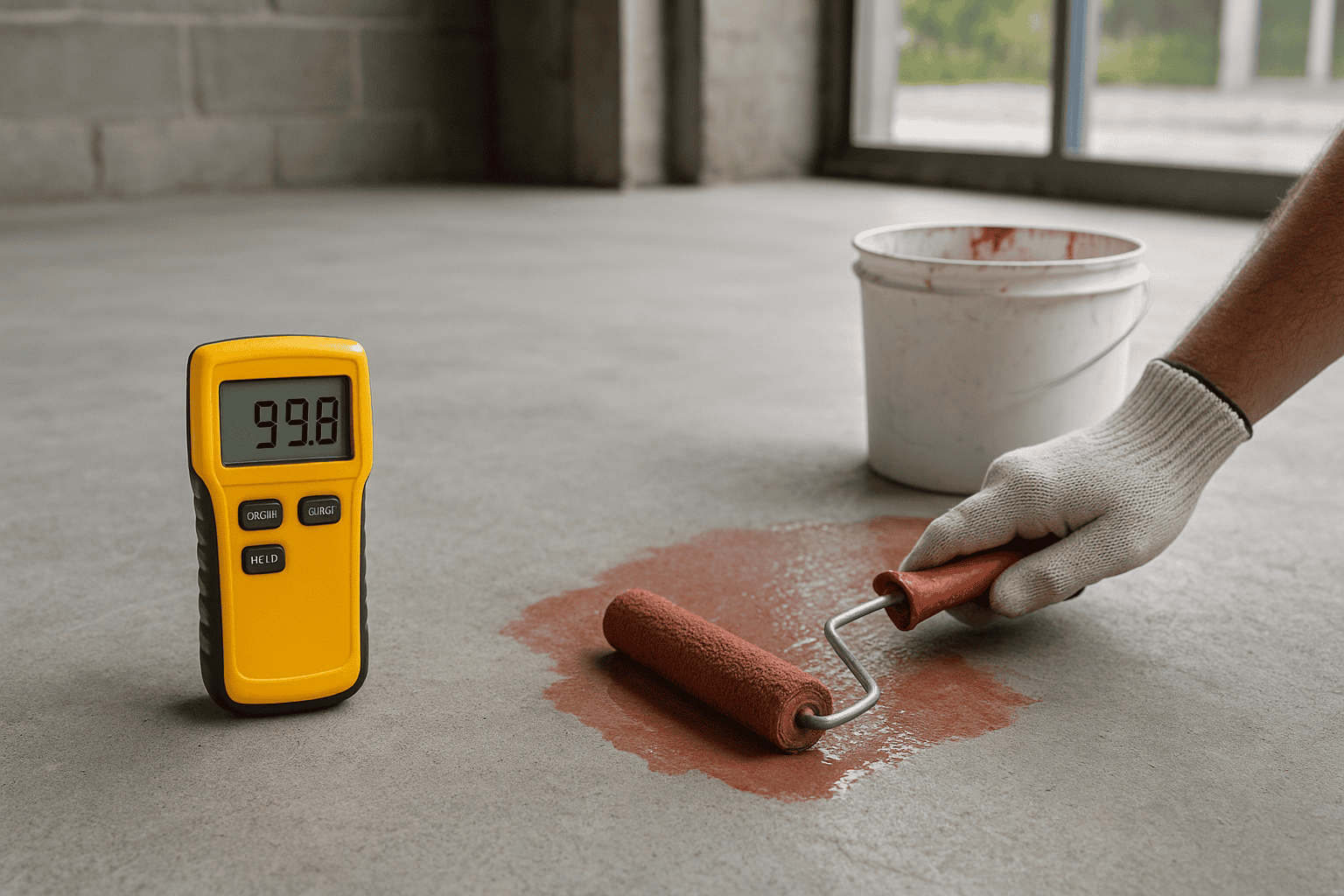
Check the subfloor before any overlay work begins. Use a long straightedge to confirm the surface stays level, since ridges, lipped tile edges, or cupped boards can telegraph through and cause movement or noise. Test moisture with an appropriate meter and follow the flooring manufacturer’s limits; where readings run high, install a compatible damp-proof membrane or address the source of moisture. Confirm stability by walking the area and listening for squeaks or hollow spots, then re-fix loose boards, lift and replace failed tiles, and remove any soft patches. Measure height clearance at door leaves, thresholds, and under appliances, because the added build-up can prevent doors from closing and can create trip points. For guidance on moisture and preparation, consult British Standards and the chosen product’s installation instructions.
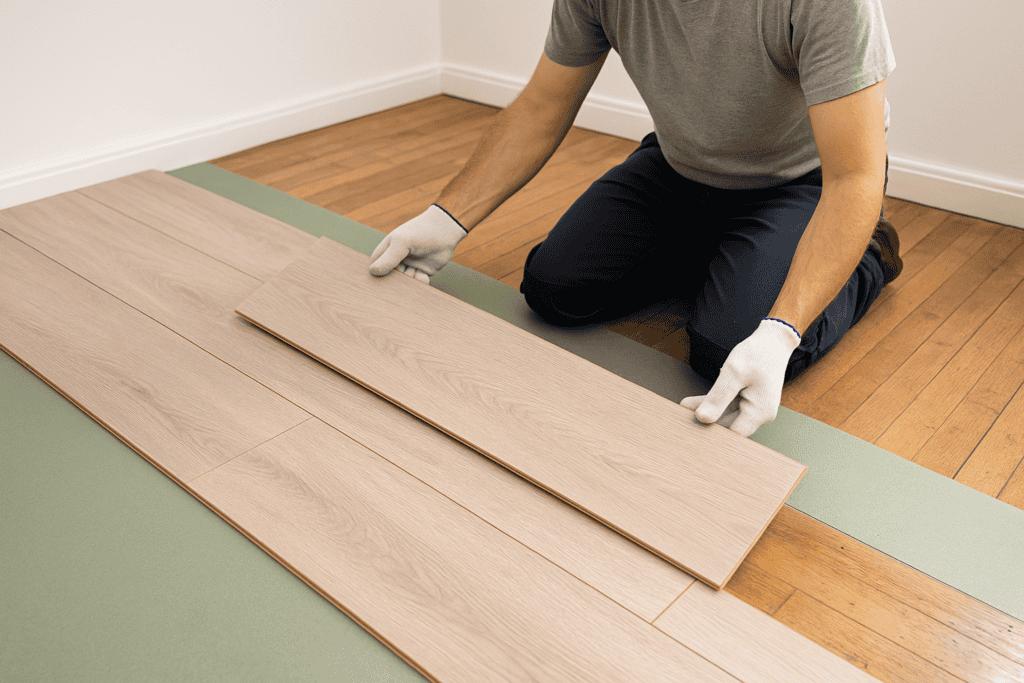
Existing floor types: tiles, timber, vinyl, laminate, and concrete
Tiles usually suit overlays when grout lines stay shallow and the surface remains firmly bonded; deep joints often need a levelling compound to prevent ridges showing through. Timber boards can take a floating floor if the boards feel rigid and flat, yet loose boards should be re-fixed and any cupping corrected to avoid squeaks. Vinyl works well when it stays fully adhered and free from cushioning; cushioned sheet vinyl can compress and cause joints to open. Laminate can act as a base only when it remains stable and dry, although most manufacturers prefer removal to avoid movement between layers; check guidance from Quick-Step. Concrete often provides the most reliable base, provided it stays dry and crack-free; where moisture risk exists, follow recommendations from British Gypsum on compatible smoothing and moisture-control systems.
Best overlay options: LVT, laminate, engineered wood, and carpet
Several floor finishes work well as overlays, provided the existing surface stays sound and the height build-up remains acceptable. The best choice depends on foot traffic, moisture risk, acoustic needs, and whether the room requires a fully waterproof finish.
- LVT (luxury vinyl tile): LVT suits kitchens, hallways, and busy living areas because it resists scuffs and handles occasional spills. Many click systems float over a suitable underlay, while dryback LVT needs a smooth, firm base. Where tile grout lines or minor texture remain, a skim of levelling compound often prevents “picture framing” and visible ridges. For product guidance, see Karndean.
- Laminate: Laminate offers a cost-effective overlay for dry rooms such as bedrooms and lounges. Most ranges use a floating click fit, which makes laminate practical over stable existing floors. Choose an underlay that matches the manufacturer’s requirements for sound reduction and moisture control, and avoid wet areas unless the product states suitability. Installation details vary by system; consult Quick-Step for typical specifications.
- Engineered wood: Engineered boards provide real timber wear layers with improved dimensional stability compared with solid wood. Floating or glued installation can work as an overlay, yet engineered wood still reacts to humidity. Maintain consistent indoor conditions and use the correct underlay or adhesive for the substrate. Manufacturer guidance helps prevent gapping and movement; refer to Junckers for technical information.
- Carpet: Carpet can overlay many existing floors when the surface stays clean, dry, and firm. A quality underlay improves comfort, warmth, and noise control, while gripper rods need secure fixing at the perimeter. Check door clearances, since underlay and pile height can affect opening and thresholds.
Before selecting any overlay, confirm the new floor’s warranty conditions, especially where underlay type, moisture limits, and maximum floor build-up apply.
Adhesives, underlay, and acoustic layers: what changes when overlaying
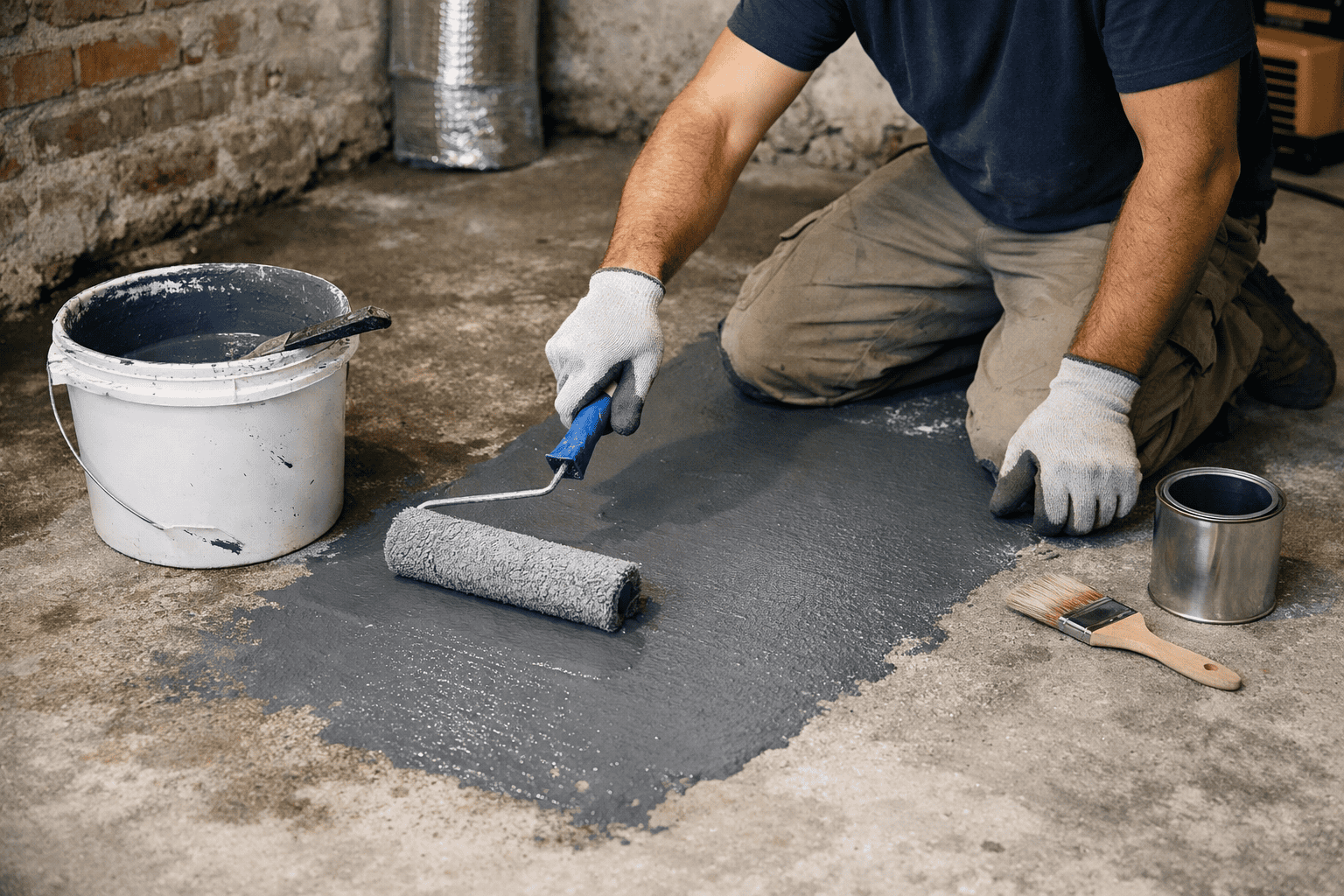
Overlay fitting changes the way adhesives, underlay, and acoustic layers perform. When a floor covering needs adhesive, the existing surface must accept bonding. Old vinyl dressings, sealers on timber, and tile contaminants can reduce adhesion, so installers often use a compatible primer and, where required, a smoothing compound to create a clean, uniform key. Always follow the flooring manufacturer’s adhesive system and guidance, such as the installation advice from F. Ball and Co..
Floating floors rely on underlay rather than glue, yet overlay work can limit underlay choice. A thick underlay may increase deflection, which can stress click joints and cause movement at thresholds. Acoustic layers also behave differently over hard existing floors, since impact sound can transmit through the original structure. Select an underlay with tested impact sound reduction and the correct compressive strength, and confirm compatibility with any integrated vapour barrier where moisture risk remains.
Door thresholds, skirting boards, and transitions between rooms
Overlay flooring often changes how doors, skirting boards, and room-to-room transitions sit. Check door thresholds early, since even a small height increase can cause doors to catch or reduce the gap needed for ventilation. Where clearance runs tight, a competent fitter can trim the door leaf and adjust the threshold strip to maintain a neat finish.
Skirting boards usually stay in place, yet the new floor must slide under the skirting line or finish with a discreet scotia beading. Avoid trapping a floating floor, as the floor needs an expansion gap to prevent peaking. Transitions between rooms also need planning, particularly where different floor types meet or where one room keeps the original finish. Use the flooring manufacturer’s recommended profiles and allow for movement joints at doorways; guidance from BSI supports using suitable trims to manage changes in level and reduce trip risks.
Common risks: trapped moisture, movement, squeaks, and uneven wear
Overlay fitting can introduce risks that do not arise when a fitter removes the old floor. Trapped moisture causes many failures. A non-breathable finish over a damp base can hold water vapour in place, which may lead to mould, adhesive breakdown, or swelling in timber-based products. Follow the moisture limits set by the flooring manufacturer and refer to guidance from the British Standards Institution (BSI) where relevant to moisture testing and resilient floor preparation.
Movement creates a second set of problems. If the existing floor flexes, a floating overlay can shift under load, which often produces squeaks and opens joints. Small changes in level also matter, since ridges and hollows concentrate pressure. That pressure can accelerate wear in the high spots, while low areas allow the surface to bounce and loosen click joints.
Uneven wear often appears first at doorways and along traffic routes. A slight lip at a tile edge or a raised board can act like a hinge point, so the overlay bends repeatedly in the same place. Over time, that bending can mark the finish, damage the locking system, or cause carpet to flatten in strips. A stable, dry, and flat base remains the best protection against noise and premature wear.
When to remove the old floor and prepare a fresh base instead
Overlay fitting does not suit every room or substrate. In some cases, removing the existing floor and preparing a clean, stable base reduces risk and improves the finish. A fresh base also makes it easier to meet manufacturer requirements for bonding, flatness, and moisture control.
- The existing floor feels loose, hollow, or cracked. Debonded tiles, failing screeds, and springy timber indicate movement below. Any new covering will mirror that instability and may fail early.
- There is a known or suspected moisture problem. Persistent damp, salts, mould, or a history of flooding calls for investigation and remediation before fitting. Follow relevant guidance in BSI standards and the flooring manufacturer’s limits.
- Height build-up will cause practical issues. If extra thickness will compromise door clearances, stair nosings, appliances, or accessible thresholds, removal often proves the safer route.
- The surface has heavy texture or multiple layers. Deep grout lines, pronounced embossing, or old adhesive ridges can telegraph through. Several layers of legacy flooring also increase deflection and make bonding unreliable.
- The room needs a fully bonded system. Some finishes require direct adhesion to a suitably prepared substrate. Old coatings, polishes, or resilient floors can prevent a dependable bond even after cleaning.
- Underfloor heating needs attention. If the heating system requires inspection, repair, or a change in build-up, lifting the old floor allows correct commissioning and heat transfer.
After removal, aim for a sound, dry, and flat base. A competent fitter will scrape residues, repair cracks, and use a suitable smoothing compound or repair mortar where needed. That preparation supports accurate fitting, reduces noise, and helps the new floor reach its expected service life.
Frequently Asked Questions
Which types of flooring can be fitted over existing floors?
Many floors can be fitted over existing surfaces, provided the base is sound, dry, level, and clean. Common options include:
- Luxury vinyl tile (LVT) and vinyl sheet
- Laminate flooring (floating systems)
- Engineered wood (floating or glued, where suitable)
- Carpet with appropriate underlay
- Click-fit tiles and some ceramic tiles with correct preparation
What checks should be completed to confirm an existing floor is suitable for overlay flooring?
Check the existing floor for soundness, dryness, and levelness. Confirm it has no loose tiles, hollow areas, rot, or movement. Measure moisture and address rising damp before fitting. Remove contaminants such as wax, oil, or adhesive residue. Verify door clearances, skirting lines, and thresholds. Ensure the subfloor suits the chosen overlay and underlay.
How does fitting new flooring over an existing floor affect floor height, doors, and skirting boards?
Fitting new flooring over an existing floor raises the finished floor height. As a result, doors may rub and often need trimming or rehanging. Skirting boards can sit too low, leaving a visible gap, so installers may add scotia beading or replace skirting. Check thresholds, appliances, and radiator pipe clearances before work starts.
When should the existing floor be removed instead of fitting new flooring over it?
Remove the existing floor when it is loose, uneven, water-damaged, mouldy, or structurally unsound. Take it up if it traps moisture, hides rot, or causes height issues at doors, stairs, or thresholds. Removal also suits floors with adhesive residue, asbestos risk, or incompatible surfaces that prevent proper bonding.
What underlay or levelling products are required when installing flooring over tiles, concrete, or timber?
Over tiles, use a levelling compound to remove lipping, then fit an underlay matched to the floor type (foam or rubber for laminate and engineered wood). Over concrete, apply a damp-proof membrane (DPM) where needed, then use acoustic underlay. Over timber, secure loose boards, add plywood or fibreboard if uneven, then use underlay.