UK period properties often feature timber floors, stone flags, and early screeds that behave differently from modern systems. Age, moisture movement, and past alterations can lead to issues such as uneven surfaces, springy boards, draughts, and persistent squeaks. In some homes, hidden defects sit beneath carpets or laminate, including rot, woodworm, and failed repairs. Understanding common flooring problems helps owners plan suitable maintenance and avoid changes that trap damp or worsen structural movement.
Key takeaways
- Suspended timber floors often sag due to joist decay and weakened fixings.
- Rising damp and poor ventilation can cause rot, mould, and musty odours.
- Woodworm activity may leave exit holes, frass, and brittle floorboards.
- Uneven floors can indicate settlement, altered load paths, or historic repairs.
- Gaps and draughts commonly appear as boards shrink and fixings loosen.
- Inappropriate modern screeds can trap moisture and damage original timber structures.
How UK period property floors were built and why faults develop
Many UK period properties used suspended timber floors at ground level. Builders set softwood joists into external walls and supported joists on sleeper walls, leaving a ventilated void beneath. Air bricks fed outside air into the void to keep timbers dry. Upper floors often used timber joists with lath and plaster ceilings below, while some later Victorian homes introduced solid floors in kitchens and sculleries.
Faults develop when moisture and movement exceed what the original build can tolerate. Blocked air bricks, raised external ground levels, or leaking gutters reduce ventilation and raise humidity in the void. As a result, joist ends and floorboards can suffer fungal decay and wood-boring beetle attack. Seasonal shrinkage and swelling also loosen fixings, which leads to squeaks and uneven boards. Settlement in old foundations can twist joists and create sloping floors, especially where internal walls changed over time. Modern interventions can worsen matters; cement-based screeds and impermeable finishes can trap moisture that older, breathable materials would have released. Guidance from Historic England supports a like-for-like approach that preserves ventilation and vapour movement.
Suspended timber floors: rot, woodworm, springiness and ventilation failures
Suspended timber floors in period homes often fail when moisture, insects and poor airflow combine. Rot usually starts where timbers stay damp, such as near blocked air bricks, leaking rainwater goods, bridged damp-proof courses, or plumbing leaks. Early signs include a musty smell, dark staining, and timber that feels soft under a screwdriver. If decay reaches joist ends built into masonry, the floor can lose strength quickly.
Woodworm describes the larvae of several beetles that bore through timber. Fresh activity often shows as clean, pale dust (frass) and crisp-edged exit holes. Old holes can look alarming but may be inactive. Correct identification matters because common furniture beetle needs higher moisture than deathwatch beetle, which can affect older hardwoods in persistently damp buildings. For practical guidance on recognising beetle damage, consult Heritage House.
Springiness and bounce usually point to structural movement rather than surface wear. Typical causes include undersized or over-spanned joists, joists weakened by notches and holes for services, decay at bearings, or loose floorboards and fixings. Localised dips can also indicate a failed sleeper wall or a joist that has twisted. A floor that slopes towards an external wall may suggest long-term moisture at the perimeter.
- Ventilation failures: blocked, painted-over or bridged air bricks; external ground levels raised above vents; insulation stuffed into the void.
- Moisture sources: leaking gutters, defective pointing, overflowing gullies, or condensation from unvented appliances.
- Safety red flags: sudden new deflection, widespread softness, or cracking sounds under load.
Remedies should address the cause before repairs. Clearing and reinstating cross-ventilation, lowering external ground levels, and fixing leaks often stabilise conditions. Avoid sealing floors with impermeable finishes that trap moisture. Where structural repairs are needed, a surveyor or conservation specialist can specify joist repairs, resin splices, or replacement sections that match the building’s behaviour. Guidance on caring for traditional floors is available from Historic England.
Solid floors: damp ingress, salt contamination and crumbling screeds
Many period homes have solid ground floors in later kitchens, sculleries, hallways or extensions. These floors often fail when moisture rises through the ground or enters at the edges. Damp ingress can show as dark patches, a persistent musty odour, lifting floor finishes, or a cold surface that never seems to dry. Where a damp-proof membrane is missing, punctured or poorly lapped to the wall damp-proof course, moisture can track into the screed and adjacent plaster.
As water moves through masonry and concrete, it can carry soluble salts. Salt contamination often leaves a white, powdery deposit and can cause repeated failure of paints, adhesives and levelling compounds. Hygroscopic salts also attract moisture from the air, so the floor may stay damp even after a leak has stopped.
Crumbling screeds usually point to long-term damp, weak mixes, or sulphate attack, which can occur when sulphates in the ground react with cement. Hollow-sounding areas, surface dusting and localised collapse near thresholds or fireplaces warrant prompt investigation. Guidance from the Historic England can help owners choose repairs that manage moisture without trapping it beneath impermeable finishes.
Surface and structural movement: unevenness, cracks, gaps and loose boards
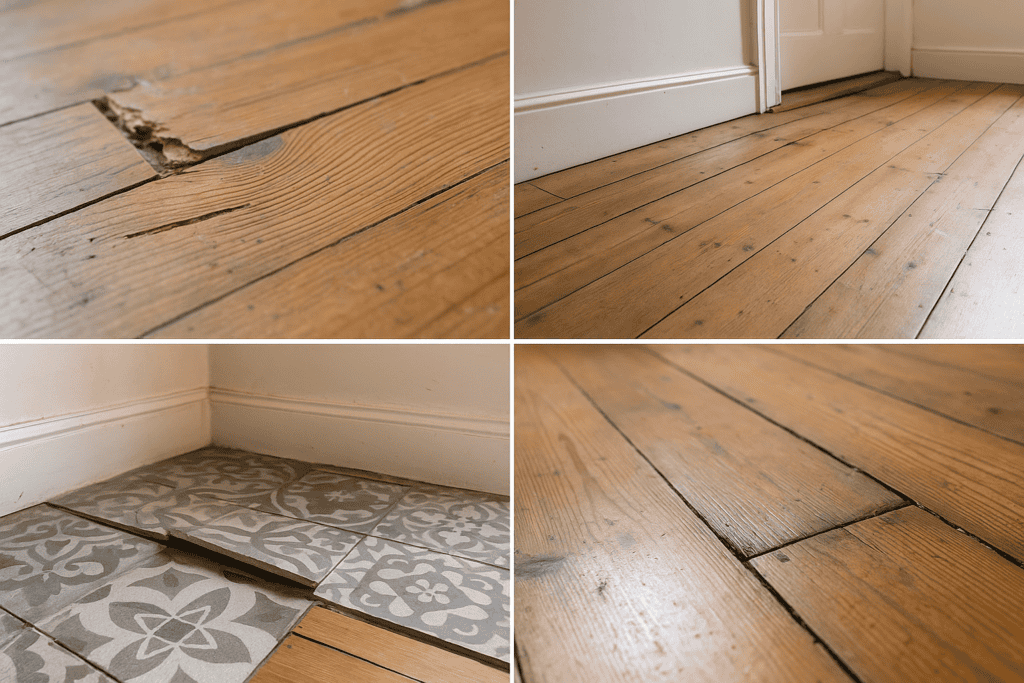
Surface and structural movement often shows as uneven boards, hairline cracks, widening gaps and localised looseness. Seasonal humidity changes can make timber expand and shrink, which opens joints in winter and tightens them in summer. Repeated movement then works fixings loose, so boards start to creak, lift at edges or rock underfoot. In some rooms, earlier repairs can worsen the issue when hard fillers or rigid adhesives restrict natural movement and force cracks to appear elsewhere.
Structural movement has different clues. Settlement can create a noticeable slope, while deflection (sag) can form a shallow dip between supports. Cracks that run in straight lines across multiple boards, or gaps that keep widening, can point to a supporting problem rather than normal shrinkage. Loose boards near walls may indicate failing support at the perimeter, while movement around fireplaces can relate to altered hearths or past chimney work.
Checks should focus on patterns and change over time. A simple level and careful measurement can confirm whether unevenness stays stable. Where movement progresses, a surveyor can assess the structure and advise on repairs; guidance on engaging the right professional sits on the Royal Institution of Chartered Surveyors (RICS) website.
Diagnosis and next steps: checks, safe temporary measures and when to use a specialist
Quick checks you can do without lifting the floor
Start with simple observations that do not disturb finishes. Note where the problem occurs, how long it has been present, and whether it changes after heavy rain or central heating use. Check for obvious moisture sources such as leaking pipework, overflowing condensate, or defective seals around baths and showers.
Use a torch to inspect skirtings, thresholds and the base of external walls for tide marks, powdery deposits, or crumbling plaster. Where a suspended floor exists, confirm that air bricks sit clear of soil, paving and vegetation. If safe access exists, look into the sub-floor void through an air brick with a small mirror and torch to check for standing water, debris, or collapsed ventilation paths.
- Record readings with a basic hygrometer to track indoor humidity; aim for steady conditions rather than extremes.
- Photograph defects with a date stamp to monitor change.
- Check that doors and windows still open freely, as sticking can indicate movement that affects floors.
Safe temporary measures while you investigate
Reduce risk before any repair work. Keep loads light over suspect areas and avoid placing heavy furniture on a springy or uneven section. Improve ventilation in the room by using existing vents and maintaining gentle background heat. If a leak exists, isolate the water supply and arrange prompt repair.
Do not seal damp floors with impermeable coverings, such as vinyl or non-breathable underlay, as trapped moisture can worsen decay. Avoid injecting chemical treatments or applying tanking products without a clear diagnosis, since inappropriate use can redirect moisture and create new defects.
Temporary measures should reduce harm, not conceal symptoms. If conditions change quickly, treat the issue as urgent.
When to use a specialist
Seek professional help when you see widespread softness, sudden slope changes, or cracking that grows over weeks. Engage a chartered building surveyor for diagnosis, particularly where structure may be affected. Use the Royal Institution of Chartered Surveyors (RICS) directory to find suitably qualified surveyors.
For timber decay, wood-boring insects, or sub-floor moisture, a specialist contractor can inspect safely and propose targeted repairs. Choose firms that follow recognised standards, such as those associated with the Property Care Association (PCA). If movement suggests subsidence, drainage failure, or structural alteration, consult a structural engineer registered with the Institution of Structural Engineers.
Frequently Asked Questions
What flooring issues occur most often in UK period properties?
UK period properties often suffer from uneven or bouncy floors caused by joist movement, rot, or poor support. Damp can lead to warped boards, mould, and decay. Woodworm may weaken timber. Gaps, draughts, and squeaks are common as boards shrink and fixings loosen. Older subfloors can also lack ventilation, which worsens moisture problems.
How can you tell whether uneven floorboards indicate structural movement or normal settlement?
Normal settlement usually causes gentle, long-standing undulations with no new cracks or sticking doors. Structural movement often shows recent or worsening slopes, springy boards, widening gaps, cracked plaster, misaligned skirting, or doors and windows that jam. Check whether changes progress over weeks or months; seek a surveyor if symptoms increase or appear suddenly.
What causes timber floorboards to creak in older homes, and how can you reduce the noise?
In older homes, floorboards creak when boards rub on fixings or each other, often due to shrinkage, loose nails, worn joists, or movement from uneven supports. Reduce noise by re-fixing boards with screws, packing gaps with thin shims, securing loose joists, and adding talc or graphite powder between rubbing edges.
How does rising damp affect traditional timber floors, and what early warning signs should you check?
Rising damp lifts moisture from the ground into walls and sleeper walls, raising humidity beneath timber floors. This can cause rot, mould, cupping, loose boards, and weakened joists. Check early signs such as musty odours, dark staining on skirtings, salt deposits, persistent condensation, springy floors, and powdery or soft timber near external walls.
Why do suspended timber floors in period properties develop bounce or spring, and what repairs suit them?
Suspended timber floors often bounce when joists sag, fixings loosen, or timber decays from damp and poor ventilation. Over-spanned joists and removed internal walls can also reduce stiffness. Suitable repairs include improving subfloor ventilation, treating and replacing rotten timber, re-fixing loose boards, adding noggins, sistering joists, and installing discreet supports or a new sleeper wall.
When should you replace floorboards rather than repair them in a period property?
Replace floorboards when rot, woodworm, or persistent damp has weakened the timber, when boards have split through their thickness, or when fixing points no longer hold. Choose replacement if more than a small section needs patching, if boards have lost their level and spring, or if repairs would trap moisture under the floor.
How can you manage draughts and heat loss through traditional suspended floors without harming ventilation?
Seal gaps at skirting boards and between floorboards with flexible draught-proofing, then insulate between joists using breathable materials. Fit a vapour-permeable membrane and support netting to prevent sagging. Keep air bricks and underfloor vents clear, and avoid blocking the void. Where needed, add controllable vents to balance warmth and airflow.