Flooring influences home value because buyers treat it as a visible indicator of condition and maintenance. In the UK, replacing worn carpets or dated vinyl can shift first impressions within seconds of a viewing, while durable options such as engineered wood and quality laminate often signal lower near-term repair costs.
This guide examines how common flooring types affect perceived quality, resale appeal, and likely buyer objections, helping homeowners prioritise upgrades that align with local expectations and typical budgets.
Key takeaways
- Hardwood floors typically raise resale value more than carpet in living areas.
- Luxury vinyl plank can mimic timber while offering better water resistance.
- Carpet often reduces buyer appeal, especially in dining rooms and hallways.
- Tile flooring adds value in kitchens and bathrooms due to moisture durability.
- Consistent flooring across main rooms can make homes feel larger and updated.
- Worn, mismatched, or damaged floors can lower offers even after renovations.
How buyers and valuers assess flooring quality and condition
In 2024, NAR’s Remodeling Impact Report reported a 147% cost recovery for refinished hardwood floors at resale, one of the strongest returns among interior upgrades. Buyers and valuers treat flooring as both a condition signal and a pricing input because it affects first impressions, maintenance expectations, and the perceived age of the home. A worn surface can imply deferred upkeep elsewhere, while consistent, well-fitted flooring supports a “move-in ready” valuation.
Valuers typically assess three elements: material quality, installation standard, and remaining service life. For example, a properly maintained hardwood floor often lasts 30–100 years, while mid-range carpet commonly lasts 5–15 years, which changes how quickly a purchaser expects replacement costs. Condition also drives deductions: visible scratches, cupping, or staining can shift a room from “good” to “fair”, reducing comparable appeal even when square footage matches.
Buyers also price in hygiene and performance. The Asthma + Lung UK notes that carpets can trap dust and allergens, which can influence demand in households managing respiratory symptoms. As a result, valuers often see hard flooring as a lower-risk finish, while penalising patchwork repairs, mismatched transitions, and moisture damage that suggests an unresolved underlying issue.
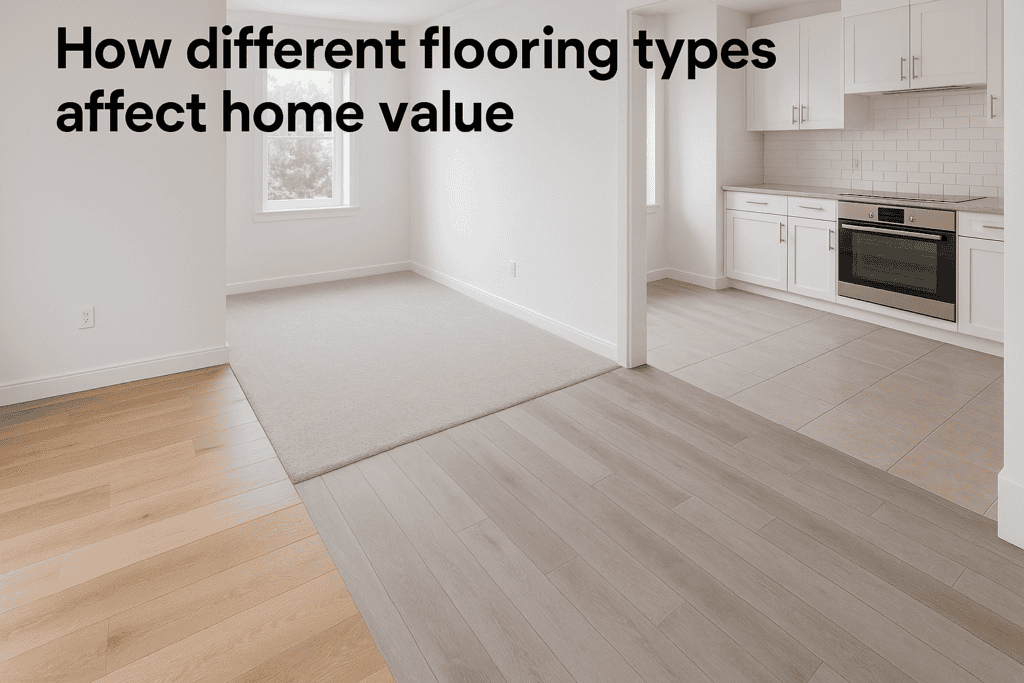
Hardwood and engineered wood: value impact, durability, and refinishing potential
A valuer tours a 1930s semi where the lounge has original oak boards, sanded and sealed, while the kitchen uses engineered planks over underfloor heating. The hardwood reads as long-life fabric: a 18–20 mm solid board often tolerates 3–5 full refinishes, which can translate into decades of service when owners recoat high-traffic areas every 5–7 years. Engineered wood usually carries a 2–6 mm wear layer, so the floor may only accept 1–2 light sands, yet the cross-laminated core improves stability when humidity shifts by 10–15% across seasons.
That difference shapes value because buyers price risk. Solid hardwood tends to support stronger resale premiums where period character matters, while engineered wood can protect value in kitchens and extensions by reducing cupping and gapping. For durability benchmarks and species hardness, valuers often reference the Wood Database Janka ratings, where oak sits around 1,290 lbf, signalling better dent resistance than softer pines.
Laminate and luxury vinyl: cost-to-value trade-offs and buyer perceptions
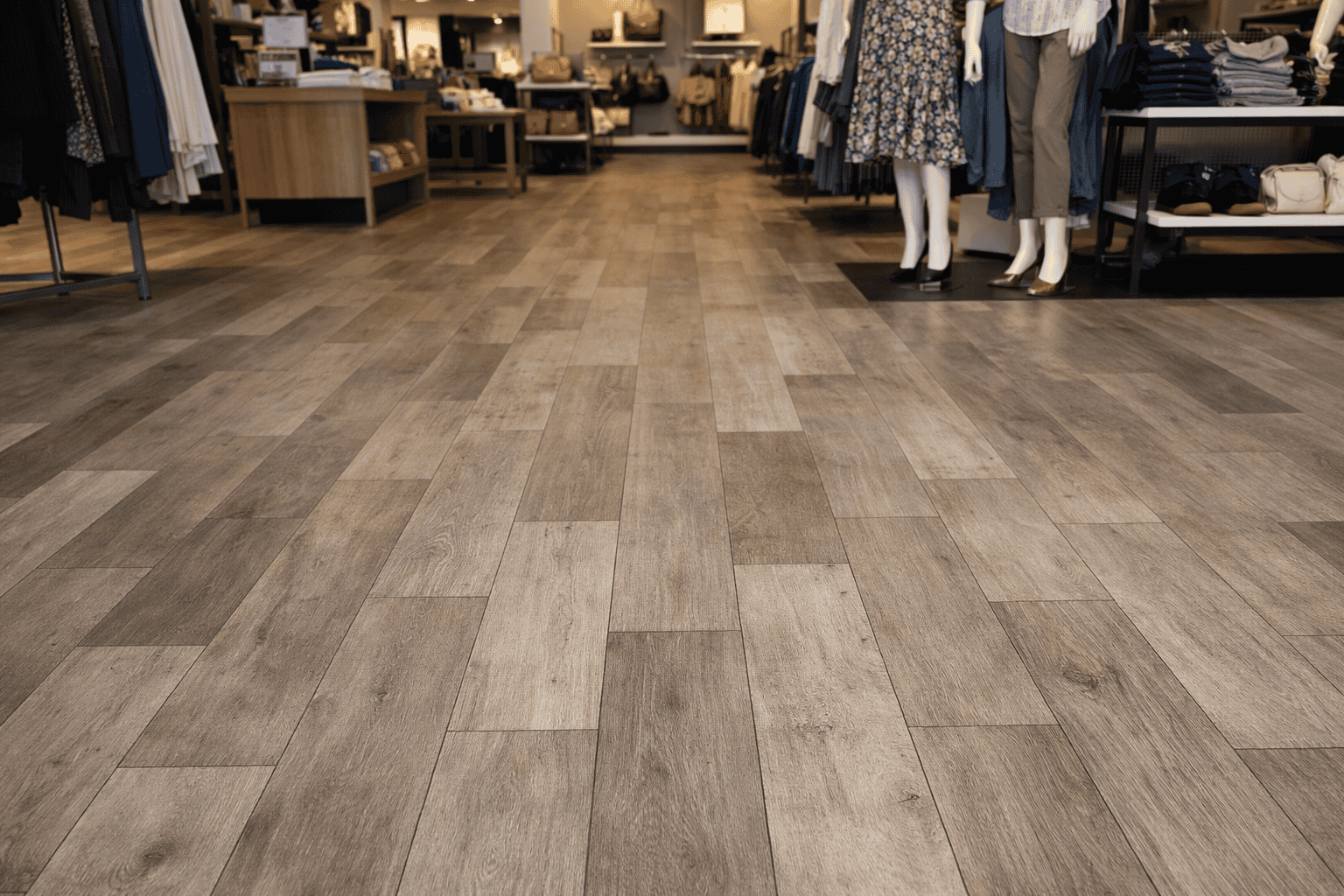
Laminate and luxury vinyl tile (LVT) can look similar in listings, yet buyers often separate them by moisture tolerance and perceived longevity. In the UK, laminate commonly installs at about £15–£40 per m² for materials, while LVT typically sits around £20–£60 per m², depending on wear layer and brand. A 0.55 mm wear layer usually signals “commercial grade” LVT, while many budget ranges use 0.2–0.3 mm, which can show scuffs sooner in hallways.
| Factor | Laminate | LVT |
|---|---|---|
| Water resistance | Swelling risk if water penetrates joints | High resistance; suitable for kitchens and many bathrooms |
| Feel and acoustics | Can sound hollow without quality underlay | Often quieter and softer underfoot |
| Repairability | Board replacement; no refinishing | Plank/tile replacement; no refinishing |
| Buyer perception | Value-led, “good if new” | More premium when thick and well-fitted |
Key differences show up at viewings: lifted edges, joint gaps, and water staining can make laminate read as short-life, even when the décor looks fresh. LVT tends to hold value better in wet-prone rooms, but buyers notice cheap click systems and thin wear layers.
For practical impact, match the product to the room and maintain it visibly. Regular care reduces surface haze and micro-scratches; use guidance such as how to clean lvt to keep LVT looking “newer” at valuation time.
Tile and natural stone: room-by-room suitability, maintenance, and resale appeal
Cold, cracked grout and chipped edges create valuation risk because buyers price in remedial work. In the UK, professional regrouting commonly costs about £15–£30 per m², while replacing damaged porcelain tiles often runs £40–£120 per m² with labour and adhesive. Those figures can trigger a four-figure negotiation in an average kitchen or hallway.
Use tile and natural stone where moisture and abrasion drive decisions. Porcelain suits kitchens, bathrooms, and entrances because it absorbs under 0.5% water by volume, while limestone and marble need sealing to reduce staining from oils and acids. Underfloor heating works well with tile, but movement joints and correct adhesive selection prevent debonding.
Implementation starts by checking subfloor flatness to within 3 mm over 2 m, then planning thresholds and door clearances before deciding can flooring be fitted over existing finishes. After installation, seal natural stone on day one and re-seal every 12–36 months, depending on traffic and cleaner pH.
When surfaces read “low maintenance”, valuers apply fewer condition deductions. A consistent tile finish across wet areas reduces buyer uncertainty and supports stronger offers.
Carpet and alternative finishes (concrete, cork, bamboo): where they help or hurt value
In the UK, carpet still covers about 34% of floors, while wood accounts for roughly 29% and laminate about 17% (as of 2022, Office for National Statistics). That split matters because valuers and buyers often treat carpet as a short-life finish: mid-range carpet typically lasts 5–10 years in busy rooms, so visible wear can translate into an immediate replacement allowance during negotiations.
Carpet can support value when it improves comfort and acoustics in bedrooms, yet it can depress appeal in living areas where buyers expect hardwearing surfaces. Alternative finishes behave differently. Polished concrete can work in contemporary extensions, but cracks and poor insulation performance can deter offers because remedial work often involves grinding and resealing. Cork and bamboo sit between “natural” and “niche”: cork commonly measures about 4–6 mm in thickness and resists impact well, while bamboo’s hardness varies widely by product, so inconsistent quality can raise buyer scepticism.
Frequently Asked Questions
How does hardwood flooring influence resale value compared with carpet?
Hardwood flooring typically raises resale value more than carpet because buyers associate it with durability and lower allergen retention. In the 2024 NAR “Remodelling Impact Report”, refinishing hardwood returned about 147% of cost, while installing new wood returned about 118%. Carpet often reduces appeal due to wear, staining, and replacement costs.
Which flooring types deliver the highest return on investment in kitchens and bathrooms?
Porcelain or ceramic tile and quality luxury vinyl tile (LVT) tend to deliver the highest ROI in kitchens and bathrooms. Tile typically lasts 20–50 years and resists water and heat, which reduces replacement risk. LVT costs about £20–£60 per m² and installs quickly. Engineered wood suits kitchens, but avoid it in wet bathrooms.
How do luxury vinyl plank and laminate compare for perceived value and durability?
Luxury vinyl plank (LVP) often signals higher perceived value because it mimics timber or stone and suits kitchens and bathrooms. LVP typically resists water and scratches better, with 12–28 mil wear layers common. Laminate can look premium for less, but its fibreboard core swells with moisture; AC3–AC5 ratings improve durability.
Do eco-friendly flooring options such as bamboo or cork increase buyer demand and sale price?
Yes. Eco-friendly floors such as bamboo or cork can raise buyer demand, particularly among sustainability-focused households, and may support a higher sale price when condition and installation quality are strong. In the UK, EPC ratings influence value; homes rated A–B sold for about 14% more than D-rated homes in 2024 (ONS). Low-VOC, durable flooring also reduces buyer objections.