How underfloor heating affects flooring performance
Underfloor heating changes how a floor behaves because heat rises through the structure every day. That steady warmth can dry some materials, which may lead to shrinkage, gaps, or surface checking if the product does not suit heated systems. Timber and laminate often need strict limits on moisture content and temperature, while many vinyl and engineered boards require approved adhesives and a stable subfloor to prevent movement.
Heat transfer also affects comfort and running costs. Dense, thin finishes usually pass heat more efficiently, which helps the system reach the set temperature with less delay. By contrast, thick or highly insulating floors can slow heat output and reduce responsiveness. Most manufacturers set a maximum surface temperature, commonly around 27 °C, to protect the floor and maintain comfort. Guidance from CIBSE supports careful temperature control and correct commissioning.
Thermal cycling matters as well. Repeated warming and cooling can stress joints and adhesives, so acclimatisation, expansion gaps, and gradual heat-up schedules protect performance. A compatible underlay and low thermal resistance across the full build-up also help the floor deliver consistent heat.
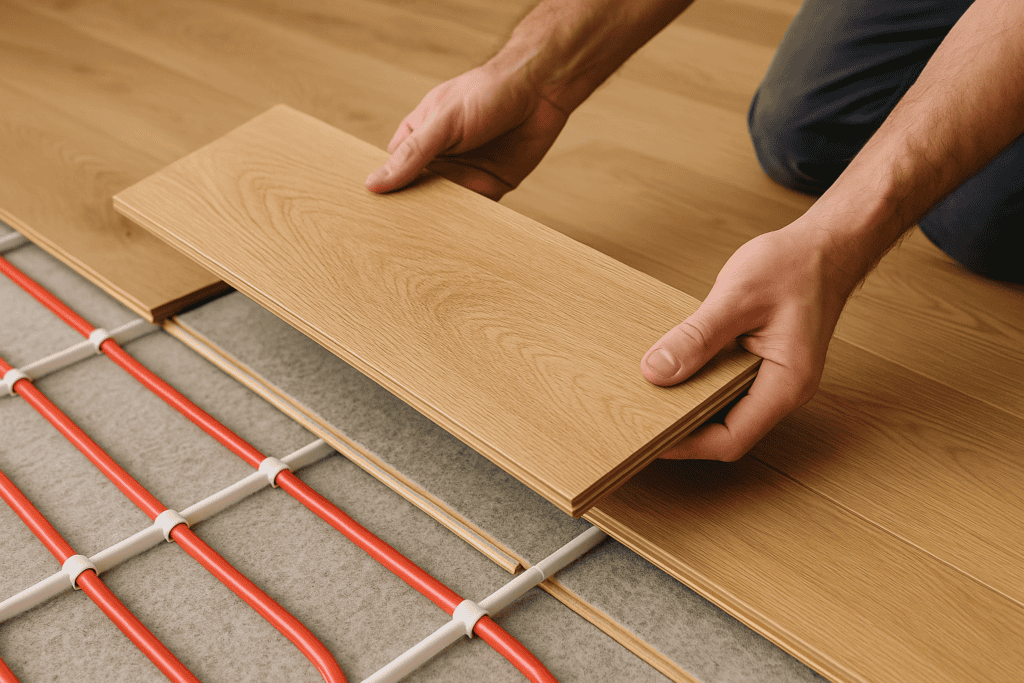
Engineered wood on underfloor heating: suitability, limits, and care
Engineered wood usually suits underfloor heating because the board uses a real timber wear layer bonded to a stable core. That layered build reduces movement compared with solid wood, so the surface stays flatter as temperatures change. Even so, engineered boards still react to heat and humidity, so product choice and installation method matter.
Check the manufacturer’s declared thermal resistance (tog value) and confirm that the board carries an explicit underfloor heating approval. Many suppliers set a maximum surface temperature of about 27 °C, and installers should measure temperature at the floor surface rather than at the manifold. Some systems also require gradual commissioning, with slow temperature increases after installation, to avoid shock drying.
Board thickness and construction influence performance. Thinner engineered boards often transfer heat more efficiently, while very thick planks can slow heat output and increase running costs. Species selection also plays a part, as some timbers move more than others; a retailer should provide guidance on suitability for heated floors.
Installation needs equal care. A fully bonded installation with an underfloor heating-rated adhesive often improves heat transfer and reduces hollow spots, provided the subfloor meets moisture limits. Floating installations can work, but underlay choice becomes critical because high-tog underlays can restrict heat. For practical guidance on commissioning and temperature control, consult CIBSE resources and your heating installer’s specifications.
Ongoing care focuses on stability. Maintain steady heating schedules, avoid sudden high set-points, and use a hygrometer to keep indoor relative humidity in a comfortable band. Clean with a lightly damp mop and a wood-safe cleaner, then dry the surface promptly. Area rugs can insulate the floor; keep rugs breathable and avoid covering large areas during peak heating periods.
Luxury vinyl tile (LVT) and rigid core floors: heat transfer and stability
Luxury vinyl tile (LVT) and rigid core floors often suit underfloor heating because the products stay dimensionally stable and pass heat efficiently. Most LVT uses a thin, dense construction, which helps warmth move through the floor with minimal delay. Rigid core options, such as stone polymer composite (SPC) and wood polymer composite (WPC), add a stiff core that resists minor subfloor variation and reduces the risk of telegraphing (when imperfections show through the surface).
Heat transfer depends on total thermal resistance, which manufacturers often state as a tog value. Lower resistance allows faster heat-up and steadier room temperatures. Even when a product has a low tog value, installation choices can reduce performance. A thick underlay, for example, can act as insulation and slow response times. For glued LVT, the adhesive type also matters, as some products need a pressure-sensitive or hard-set adhesive approved for heated substrates.
Stability remains the main advantage, yet LVT and rigid core floors still expand and contract with temperature changes. For that reason, installers should follow the stated maximum surface temperature and warm-up schedule. Many systems use a gradual commissioning process after installation to protect the floor and adhesive bond. A well-prepared subfloor also supports long-term results, since ridges, cracks, or moisture issues can lead to debonding, joint stress, or visible imperfections.
For commercial projects, specify a wear layer and slip rating that match footfall and cleaning routines, then confirm the product warranty covers underfloor heating. Professional fitting reduces risk and supports compliance with manufacturer guidance, so it is prudent to use an experienced Floor Fitter for subfloor testing, adhesive selection, and temperature control during commissioning.
Tile and stone floors: heat output, comfort, and installation notes
Tile and stone floors usually deliver the strongest heat output on underfloor heating. Dense materials conduct heat well, so rooms reach the set temperature faster and hold warmth for longer after the system cycles off. As a result, many homeowners describe the surface as consistently comfortable underfoot, even at modest flow temperatures. Porcelain and ceramic tiles often feel slightly quicker to warm than thicker natural stone, yet both options suit low-temperature systems when the build-up stays sensible.
Comfort depends on more than the finish. Grout lines and tile size influence how the floor feels when barefoot, while a textured stone can feel warmer than a polished surface at the same temperature. A well-designed system should avoid hot spots, but installers still need to follow the heating supplier’s commissioning steps, including gradual heat-up and cool-down. Guidance from CIBSE supports controlled commissioning to reduce stress in the floor build-up.
Installation quality has a direct effect on performance and durability. A flat, rigid subfloor helps tiles resist cracking when temperatures change. Installers should also choose a flexible, cement-based adhesive and grout rated for heated floors, since these products tolerate small movements better than standard mixes. Movement joints matter as well: perimeter gaps and intermediate joints in larger areas allow the tiled surface to expand and contract without damage. For natural stone, sealing can reduce staining and simplify cleaning, although sealing does not replace correct adhesive selection.
Thermal efficiency can drop if the specification adds insulation above the heating pipes. Thick underlays do not apply to tile, yet decoupling membranes and thicker stone can still slow heat transfer. When comparing quotes, ask for the full build-up and the expected warm-up time, not only the tile price.
Carpet and underlay: tog ratings, warmth, and running costs
Carpet can work with underfloor heating, yet performance depends on thermal resistance, measured as a tog rating. A lower combined tog rating for carpet and underlay lets heat pass through with less delay, which helps the system run at a lower water temperature or lower electrical output. That can reduce running costs and improve response times. As a guide, many installers aim for a combined tog of about 2.5 or less, although the correct limit depends on the heating design and the carpet specification.
Underlay choice often makes the biggest difference. Thick felt and high-tog foam underlays trap warmth, so the room may take longer to reach the thermostat set point. In contrast, underlays made for heated floors tend to use denser, lower-tog materials that balance comfort with heat transfer. Ask the retailer for the carpet tog and the underlay tog, then add the values to confirm the total.
Comfort remains a key benefit. Carpet softens the feel of the floor and reduces surface chill between heating cycles, which suits bedrooms and living areas. For safety and warranty, follow the system temperature limits and guidance from CIBSE on low-temperature heating design.
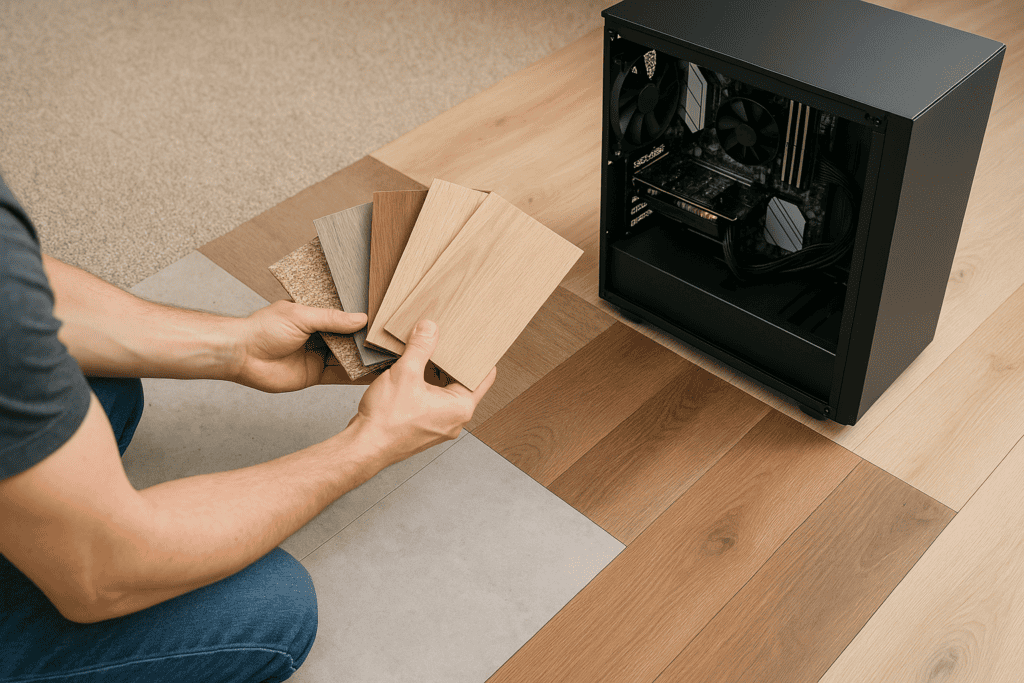
Choosing the best flooring for your system and budget: key buying criteria
Confirm system type and temperature limits
Start by matching the floor to the heating system. Water-based (hydronic) systems usually run at lower surface temperatures than electric mats, yet both need a floor that stays stable under steady warmth. Check the flooring manufacturer’s stated maximum surface temperature and confirm that the limit aligns with the system design. Many suppliers set a maximum of about 27 °C at the floor surface for timber-based products, although limits vary by range.
Ask the installer to provide a heat output calculation for the room. That figure helps you avoid a common cost issue: choosing a high-resistance floor that forces higher flow temperatures, which can raise running costs and reduce comfort.
Compare thermal resistance (tog) and heat response
Thermal resistance describes how strongly a floor slows heat transfer. Retailers often quote this as a tog value. Lower resistance usually means faster warm-up and better efficiency, while higher resistance can suit bedrooms where a softer feel matters more than rapid response.
- Prioritise low thermal resistance in kitchens, open-plan areas, and rooms with large heat losses.
- Accept moderate resistance where comfort underfoot matters more than quick heat-up, provided the system can still meet the room’s heat demand.
When comparing products, request the combined thermal resistance for the full build-up, including underlay, adhesives, and any acoustic layer. For guidance on tog and heat transfer, consult The Carpet Foundation and the product data sheets from the flooring supplier.
Check installation method, subfloor condition, and warranties
Installation details often decide long-term performance. Some floors require full-spread adhesive to control movement and improve heat transfer, while others allow floating installation with a suitable underlay. Confirm that the chosen method remains approved for heated floors, then follow the system commissioning schedule so the subfloor dries and stabilises.
Subfloor preparation also affects budget. A levelling compound, moisture barrier, or insulation upgrade can add cost, yet those items reduce the risk of failure and improve efficiency. Before purchase, obtain written confirmation that the warranty covers underfloor heating and the intended installation method. If a retailer cannot provide that confirmation, treat the product as a higher risk option.
Balance purchase price with lifetime cost
Budget decisions should include running costs, maintenance, and replacement risk. A cheaper floor that restricts heat can increase energy use for years, while a stable, low-resistance option can reduce system strain and improve comfort. Create a simple comparison using:
- Upfront costs: flooring, underlay or adhesive, trims, and subfloor preparation.
- Operating impact: expected warm-up time and required system temperature.
- Durability: wear layer, scratch resistance, and suitability for pets or heavy traffic.
- Care needs: cleaning products, refinishing potential, and moisture sensitivity.
Choose the floor that meets the room’s heat demand at the lowest practical thermal resistance, while keeping installation within the manufacturer’s warranty conditions.
If you plan to sell the property, keep product data sheets and warranty documents. Clear evidence of compatibility can support buyer confidence and reduce disputes about performance.
FAQ
Does underfloor heating work with all flooring types?
Most flooring types can work, yet suitability depends on heat limits, thermal resistance (how much the floor resists heat flow), and installation method. Always check the product data sheet for maximum surface temperature and underfloor heating approval before purchase.
What is the safest maximum floor temperature?
Many manufacturers set a maximum surface temperature of about 27°C for timber-based and resilient floors. System design, floor build-up, and room use can change the safe limit, so confirm the exact figure with the flooring supplier and the heating installer.
Will underfloor heating damage engineered wood or LVT?
Damage is unlikely when the floor suits heated systems and the installer follows the manufacturer’s instructions. Problems tend to start when the system heats up too quickly, the subfloor holds excess moisture, or the adhesive is not rated for heat. Ask for written confirmation that the chosen adhesive and underlay suit underfloor heating.
How do I compare floors for heat output?
Compare thermal resistance values, often shown as a tog rating or an R-value. Lower resistance usually means faster warm-up and better heat transfer. For clear guidance on insulation and heat flow terms, see CIBSE (Chartered Institution of Building Services Engineers).
Can I use rugs on an underfloor heated floor?
Rugs can reduce heat transfer and may create hot spots if thick or rubber-backed. Choose breathable rugs and avoid covering large areas in rooms where the heating provides the main heat source. If a supplier states a maximum tog for floor coverings, keep within that limit.
What should I ask a retailer or installer before ordering?
Request the maximum surface temperature, the floor’s thermal resistance, and confirmation of compatibility with your system type. Ask who provides the warranty when underfloor heating is present and which installation standard applies. For recognised installation guidance, consult British Standards and follow the relevant product-specific requirements.