Flooring fire classifications Afl, Bfl, Cfl, Dfl, Efl, and Ffl are standardised ratings defined under European standard EN 13501-1 that measure how floor coverings react to fire. The “fl” suffix distinguishes floor products from wall and ceiling materials, which follow a separate rating scale. This article explains what each classification means, how they differ in terms of flame spread and smoke production, and which building types or areas legally require specific ratings.
Key takeaways
- Floor coverings are classified under EN 13501-1 from A (non-combustible) down to F.
- The fl suffix distinguishes floor covering ratings from wall and ceiling classifications.
- Cfl is the minimum accepted class for most commercial offices and retail spaces.
- Smoke ratings s1, s2, and s3 are appended to the primary class, with Bfl-s1 producing less smoke than Bfl-s2.
- Fire engineers typically require s1 in escape routes, corridors, and enclosed public spaces.
- Hospitals and high-risk buildings often require Afl, the strictest floor covering classification available.
- Always verify fire class using the product’s Declaration of Performance, not the CE or UKCA mark alone.
How the European floor covering fire classification system works
Check the fire classification label on any flooring product before specifying it for a commercial or public building project. The label confirms whether the material meets reaction-to-fire requirements under EN 13501-1, which applies across EU and UK markets.
The system ranks materials from A (non-combustible) down to F (no performance determined). Floor coverings use a sub-classification with the suffix fl, reflecting how flames spread horizontally across a surface. Because fire behaviour on a floor differs from combustion on a vertical surface, regulators created a dedicated test path for it.
Each class also carries a smoke production rating: s1 (low smoke) or s2 (higher smoke). A product labelled Bfl-s1 performs well on both flame spread and smoke output. Healthcare and transport projects often carry contractual requirements referencing both components of the label, not the class alone.
What Cfl, Bfl and Afl ratings mean in practice
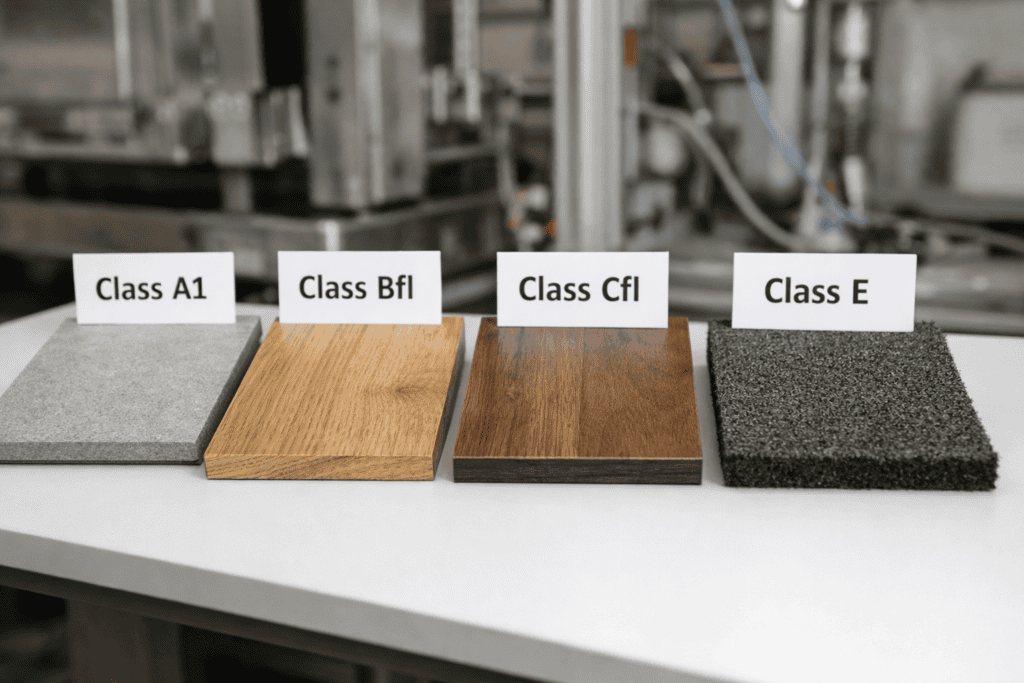
Specifying the wrong fire class can result in a building failing inspection or requiring costly remedial work. The three classes most common in commercial projects, Cfl, Bfl, and Afl, each define how far a flooring material contributes to flame spread under test conditions.
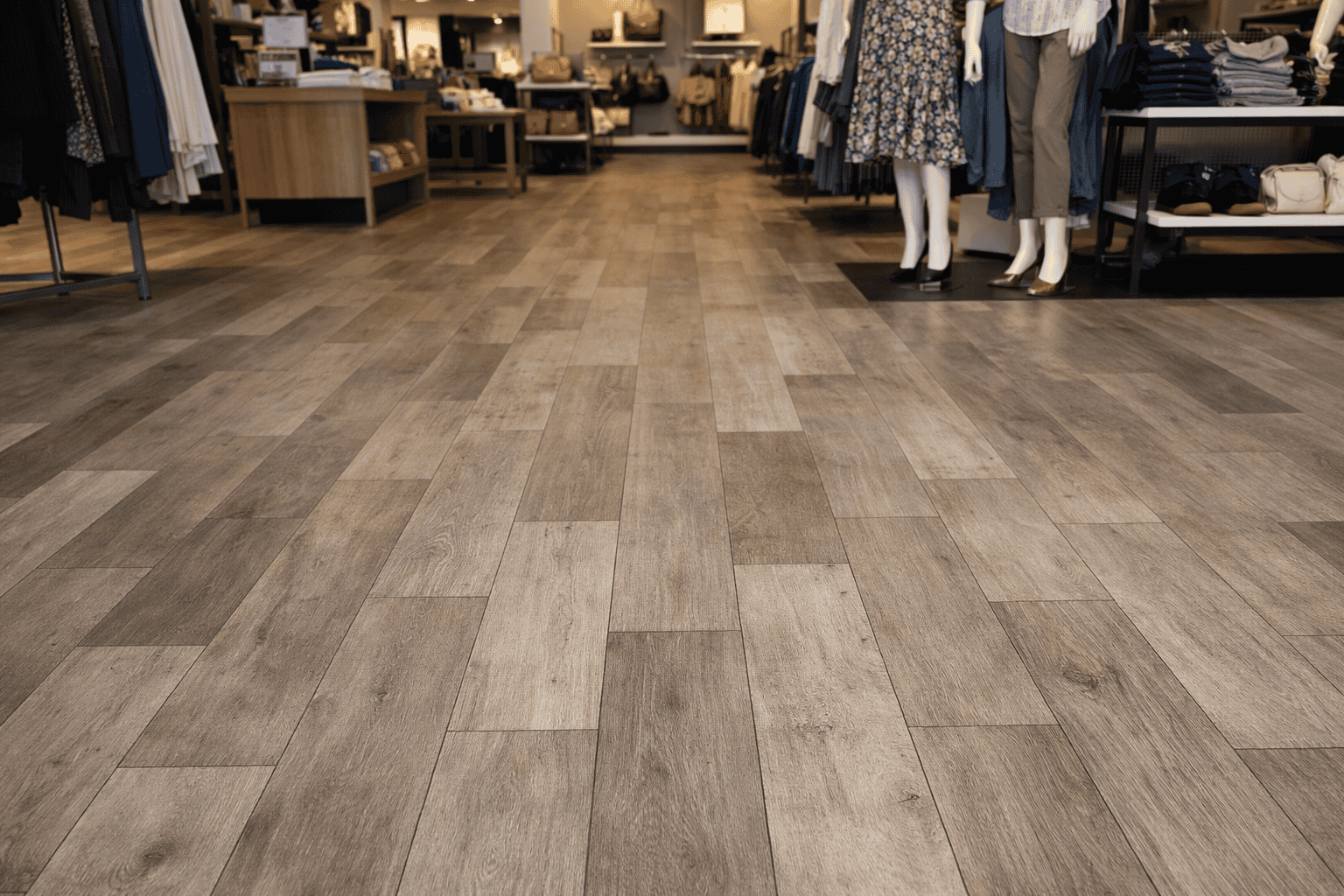
Cfl is the minimum accepted in many commercial environments, including offices and retail spaces. Materials at this level limit flame propagation moderately; luxury vinyl products such as Amtico flooring typically achieve Cfl-s1, confirming minimal smoke output.
| Classification | Typical Settings | Common Materials | Smoke Rating Required |
|---|---|---|---|
| Cfl | Offices, retail, standard commercial | LVT, carpet tile, laminate | s1 |
| Bfl | Hospitals, care homes, escape routes, transport hubs | Rubber, homogeneous vinyl, linoleum | s1 (typically mandated) |
| Afl | Plant rooms, industrial, highest-risk zones, underground stations | Ceramic tile, natural stone, concrete | s1 |
Bfl applies to higher-risk settings such as hospitals, care homes, and transport hubs, and is often the threshold written into building regulations for corridors and escape routes. Afl covers non-combustible materials including stone and ceramic tile, required in plant rooms and high-risk industrial areas where flooring must contribute nothing to fire load.
The role of smoke production ratings in floor fire classifications
Under EN 13501-1, smoke production is classified as s1, s2, or s3, appended directly to the primary class. A product rated Bfl-s1 produces significantly less smoke than one rated Bfl-s2, even though both share the same flame spread class. Dense smoke is a primary cause of disorientation in building fires, so fire engineers typically require s1 in escape routes, corridors, and enclosed public spaces.
The combined rating appears as a single string on product data sheets, such as Cfl-s1 or Bfl-s2. Stripping the suffix when compiling specifications risks selecting a product that passes the flame spread test but fails the smoke requirement on site inspection, since building control officers assess the full classification. For healthcare and transportation settings, s1 is routinely required regardless of primary class. Confirm both values by checking each product’s Declaration of Performance rather than marketing summaries.
Which fire classification is required for different building types
Building regulations determine which fire classification applies. In England, Approved Document B sets minimum reaction-to-fire performance by occupancy type, and specifiers must match the product class to those requirements before installation begins.
Residential properties generally accept Cfl-s1 in corridors and escape routes. Commercial offices and retail units typically require Bfl-s1 across circulation areas. Hospitals, care homes, and schools often need Bfl-s1 throughout, with Afl specified in high-risk zones such as operating theatres. Underground stations commonly mandate Afl across all flooring.
Requirements can shift within a single building. A retail sales floor may accept Cfl while the stockroom corridor requires Bfl-s1. The fire strategy document produced by the project’s fire engineer gives the exact class for each zone before any flooring types are selected.
Projects under the Building Safety Act 2022 face additional scrutiny for buildings over 18 metres with residential use. Test certificates and declarations of performance must be retained and submitted with the building control application. Selecting a product without documented classification can stall practical completion.
How to verify and specify the correct floor covering classification
Getting the classification wrong at specification stage can delay sign-off or trigger a full remedial replacement after installation. The most reliable starting point is the product’s Declaration of Performance (DoP), which manufacturers must publish under the Construction Products Regulation. The DoP states the tested fire class, the standard (EN 13501-1), and the specific smoke suffix. A CE or UKCA mark alone does not confirm the fire class.
Third-party test certificates from accredited laboratories such as BM TRADA or Warringtonfire provide independent verification where building control requests evidence beyond manufacturer documentation. Locking in the required class at tender stage via National Building Specification clause structures prevents substitution with a lower-rated product during procurement.
On projects spanning multiple zones, document each area’s requirement separately in the finish schedule. Confirming classification in writing with the contractor before orders are placed removes ambiguity and creates a clear audit trail for building control sign-off.
Frequently Asked Questions
What do Cfl, Bfl and Afl mean in flooring fire classifications?
These are European fire performance ratings for floor coverings, defined under EN 13501-1. Cfl indicates limited combustibility, Bfl denotes very limited flame spread, and Afl represents the highest rating, covering non-combustible materials. Each classification determines where a flooring product may legally be installed in buildings with specific fire safety requirements.
How do Cfl, Bfl and Afl ratings differ under the Euroclass system for flooring?
The Euroclass system ranks flooring by how it behaves in fire, from least to most resistant. Cfl offers limited fire performance, Bfl provides a higher level of resistance with very limited flame spread, and Afl represents the top tier, covering materials that are non-combustible or near so.
When is a Cfl fire rating required for flooring products?
Specify Cfl-rated flooring in corridors, stairwells, and escape routes within residential buildings. This classification meets the minimum fire performance threshold required by most standard commercial and multi-occupancy residential projects. Buildings under four storeys typically accept Cfl as sufficient without requiring the higher Bfl or Afl classifications.
When is a Bfl fire rating required instead of a Cfl rating?
Bfl is required in higher-risk settings where fire must be contained more reliably. This includes corridors, stairwells, and escape routes in multi-storey buildings, as well as hospitals, care homes, and large public venues. Cfl suffices for standard commercial spaces with lower occupancy or reduced fire risk.
Which types of buildings or areas may require Afl-rated flooring?
Afl is the highest fire performance class for flooring and applies in a small number of specialist settings. Escape routes in high-rise residential buildings, certain industrial facilities, and areas directly adjacent to fire exits may specify it. Offshore platforms and some transport infrastructure projects also carry Afl requirements under their individual regulations.