After-hours commercial flooring installation helps occupied buildings reduce disruption while maintaining safe access for staff and visitors. Contractors schedule work outside core operating hours, often between 18:00 and 06:00, to keep entrances, corridors, and critical rooms functional. Fast-curing adhesives and low-odour materials can allow light foot traffic within 2–4 hours, depending on the system. Clear phasing, noise controls, and next-day readiness checks protect productivity and compliance.
Key takeaways
- After-hours installation keeps offices, retail, and healthcare spaces operational during business hours.
- Phased work zones and clear access routes reduce disruption for staff, customers, and patients.
- Fast-curing adhesives and rapid-set levellers support overnight turnarounds and early-morning reopening.
- Noise, dust, and odour controls protect indoor air quality and limit complaints in occupied buildings.
- Pre-delivered materials and staged equipment shorten on-site time and prevent corridor congestion.
- Detailed scheduling, sign-off checks, and snag lists ensure consistent finish across multiple nights.
Operational Benefits of After-Hours Commercial Flooring Installation for Occupied Sites
In 2024, UK employees averaged 6.8 days of sickness absence, equivalent to 3.1% of working time (Office for National Statistics). When flooring work forces daytime closures, that lost capacity compounds quickly across reception areas, corridors, and trading floors. After-hours commercial flooring installation keeps core routes open during peak occupancy, so organisations protect revenue hours and reduce disruption to security, cleaning, and facilities schedules.
For many occupied sites, the practical gain comes from shifting noisy and high-traffic tasks into low-use windows. A typical resilient floor adhesive reaches initial set in 30–60 minutes, while many systems achieve functional cure within 12–24 hours, allowing installers to hand back zones before morning footfall. That timetable supports phased programmes, where teams isolate 20–50 m² at a time rather than closing an entire level, which suits offices, healthcare settings, and retail units with fixed opening hours.
After-hours work also tightens risk control. Facilities teams can schedule temporary barriers, signage, and cleaning so that slip risk stays low during the first 24 hours after installation, when surface contamination causes most incidents. Where hygiene or wet processes apply, selecting fit-for-purpose surfaces such as the best safety flooring options helps maintain compliance without sacrificing operational continuity.
Project Scoping and Scheduling: Surveys, Phasing Plans, and Access Management
At 18:00, a facilities manager in a live call centre hands over a marked-up floor plan: 220 m² of worn carpet tiles across two aisles and a breakout zone must be replaced before the 08:00 shift. The survey confirms 3 mm subfloor variation at a doorway and flags two high-traffic pinch points, so the contractor plans phased works that keep fire exits and a main corridor open. The access plan sets delivery for 19:30, noisy uplift from 20:00–22:00, and adhesive work after 22:00 to limit odour.
Accurate scoping starts with measured surveys, moisture checks, and a room-by-room inventory of thresholds, skirtings, and service penetrations. In the UK, resilient floor adhesives often need 24–48 hours to reach full strength, so the schedule must protect curing time with temporary routes and barriered zones. Access management also covers lift bookings, waste removal windows, and security sign-in to reduce lost time on site.
For larger buildings, the same approach scales: a written phasing plan, agreed handover points, and nightly sign-off keep occupied areas operational while installation progresses. Guidance on selecting materials that suit traffic patterns and cleaning regimes is covered in how to choose the right commercial flooring.
Installation Methods and Materials Suited to Night Work: Fast-Cure Systems, Low-Odour Adhesives, and Modular Options
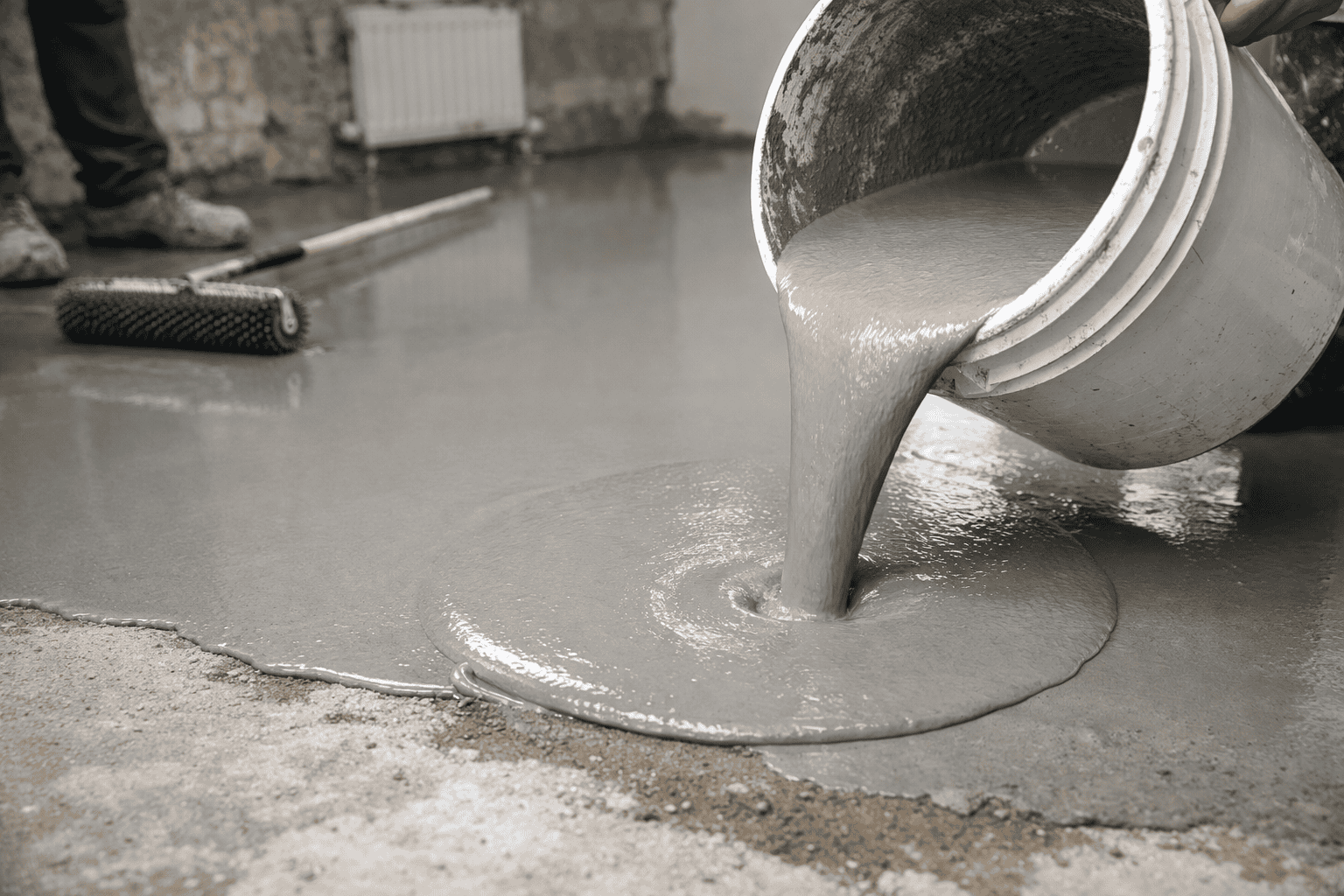
Night work favours systems that reach serviceable strength within hours, while daytime programmes can tolerate longer cure windows and stronger odours. Fast-cure resin and rapid-set smoothing compounds suit overnight handovers because many products accept light foot traffic in 2–4 hours and full loading within 24 hours, subject to site temperature and moisture. Standard adhesives and levellers often need 12–24 hours before safe access, which can force cordons and reroutes in occupied sites.
Low-odour, low-VOC adhesives reduce complaints and support indoor air quality when staff return at 08:00. In the UK, HSE COSHH duties still apply after hours, so contractors should select products with clear Safety Data Sheets and defined ventilation requirements. Match adhesive open time to the shift: a 30–60 minute working window supports controlled laying within cleaning and reoccupation limits.
| Option | Typical overnight advantage | Best-fit areas |
|---|---|---|
| Fast-cure systems | 2–4 hour walk-on times; 24 hour return to service | Corridors, receptions, trading floors |
| Low-odour adhesives | Reduced odour and VOC impact before morning occupancy | Offices, healthcare, education |
| Modular flooring (tiles/planks) | Immediate use after installation; easy phased replacement | Call centres, retail back-of-house |
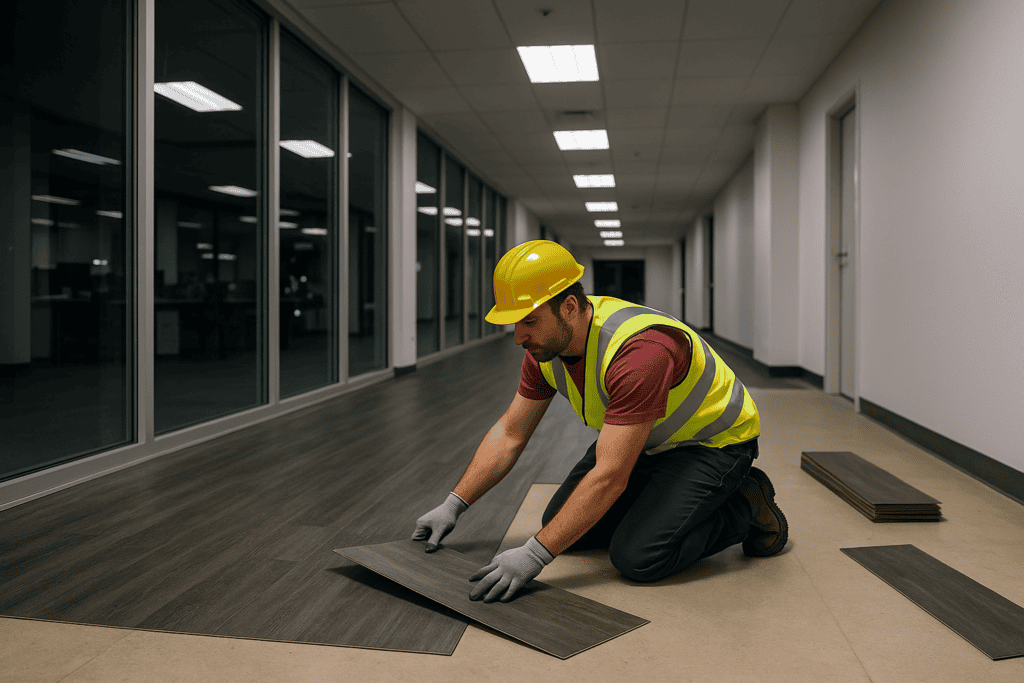
Modular options, such as carpet tiles and LVT planks, simplify phasing because teams can replace 20–50 m² per night and reopen routes without waiting for large-area cures. Material choice should align with slip risk and cleaning regimes; guidance on best safety flooring options helps when night work includes wet or food-prep zones.
Risk, Compliance, and Handover: Noise Control, Dust Containment, Safety Sign-Off, and Next-Day Readiness
Night installations can fail at handover when dust migrates into occupied areas, noise breaches site rules, or safety checks slip under time pressure. In UK workplaces, employers must control exposure to hazardous substances under HSE COSHH, and must manage workplace health and safety duties under HSE guidance. A single missed barrier or incomplete sign-off can delay reopening and trigger a re-clean, adding 1–3 hours before staff can return.
The solution combines containment, controlled sequencing, and documented compliance. Contractors should isolate the work zone with taped sheeting and door seals, then use HEPA-filter extraction during uplift and grinding to reduce airborne particulates. Noise control starts with agreed “quiet hours”, electric tooling where possible, and pre-cutting materials off-site to cut saw time.
For next-day readiness, teams should complete a walk-through by 06:30, record slip resistance and transitions, and remove trip hazards before reopening. A written handover pack should confirm curing windows, cleaning restrictions for the first 24 hours, and any temporary route changes, aligned to the site risk assessment and method statement.
Frequently Asked Questions
What types of commercial flooring can be installed after hours without disrupting building operations?
After-hours installation suits modular carpet tiles, luxury vinyl tile (LVT), click-lock vinyl planks, rubber tiles, and floating laminate, since crews can complete 50–200 m² per night and reopen areas by morning. Polished concrete overlays and fast-curing resin systems also work when specified for 4–8 hour cure windows and low-odour products.
How do contractors plan after-hours flooring installation to keep occupied areas safe and accessible?
Contractors survey traffic routes, then phase work into zones and schedule noisy tasks after closing. Teams set up barriers, warning signs and temporary walkways, keeping fire exits and lift lobbies clear. They use low-odour, fast-curing adhesives (often 2–4 hours to light foot traffic) and complete daily clean-downs before reopening.
What is the typical timeline for removing old flooring and installing new flooring overnight?
For a 20–50 m² area, overnight work typically runs 6–10 hours: 1–3 hours to uplift and dispose of old flooring, 1–2 hours for subfloor preparation, and 2–4 hours to install new flooring. Fast-track adhesives often allow light foot traffic within 2–6 hours, with full cure in 24–72 hours.
Which low-VOC adhesives and materials reduce odour and indoor air quality disruption during after-hours work?
Specify low-VOC, water-based acrylic or polyurethane adhesives (typically <50 g/L VOC) and avoid solvent-based products. Use pre-finished LVT, rubber, or linoleum with factory-applied coatings to cut on-site fumes. Select low-emitting underlayments and patch compounds (often <10 g/L VOC) and confirm compliance with GREENGUARD Gold or FloorScore.
How can phased installation and zone isolation minimise downtime in offices, retail sites, and healthcare buildings?
Phased installation divides work into zones so teams complete one area per shift while operations continue elsewhere. Zone isolation uses temporary barriers, negative air units, and signed access routes to control dust and noise. Scheduling high-traffic corridors after closing and reopening them by morning can keep 70–90% of floor area usable during multi-day projects.
What noise, dust, and waste-control measures should a flooring contractor use during night-time installation?
A night-time flooring contractor should use low-noise tools, acoustic screens, and agreed quiet hours. Control dust with HEPA-filtered vacuums, negative-air machines, sealed work zones, and tack mats at exits. Manage waste through pre-cutting off-site, bagging debris immediately, covered transport routes, and end-of-shift cleaning. Use low-odour adhesives and maintain ventilation.