FSC certified flooring is flooring made from wood or wood-based materials sourced from forests certified by the Forest Stewardship Council, with verified chain-of-custody standards through production and sale. This certification helps show that the timber comes from responsibly managed sources rather than illegal or poorly managed logging. This article explains what the FSC label means, how certification works, and why it affects sustainability, product credibility, and buying decisions.
Key takeaways
- Check the FSC claim before comparing flooring colour, wear layer, or price.
- FSC certification can cover solid timber, engineered wood, laminate cores, and fibreboard.
- Ask for documented FSC claims on quotes, delivery notes, and packaging.
- Chain of custody only works when each handler holds valid certification.
- FSC standards cover harvesting, biodiversity, soil, water, legal use, and worker safeguards.
- Verify the supplier’s FSC licence code against the exact product claim.
- Specify FSC certified flooring early where sourcing affects tenders, ESG reporting, or planning.
What FSC Certification Covers in Flooring Products
| Covered by FSC certification | Not covered by FSC certification |
|---|---|
| Wood or wood fibre from a checked supply chain | Slip resistance rating |
| Chain of custody through each handling stage | Fire performance classification |
| Controlled sourcing and separation of materials | Durability or wear performance |
| Correct labelling on packaging and sales documents | Whether the floor is suitable for a specific site on its own |
Check the product specification and ask for the FSC claim before comparing colour, wear layer, or price. That shows whether the wood or wood fibre comes from a supply chain checked against Forest Stewardship Council standards, not an unverified source.
In flooring, FSC certification can apply to solid timber, engineered wood, laminate cores, and fibreboard with wood content. Chain of custody tracks material through each stage, so each business handling the product must hold valid certification if the item is sold with an FSC claim.
FSC covers more than forest origin. Its standards address controlled sourcing, separation of certified and non-certified material, and correct labelling on packaging and sales documents. That affects specification accuracy, tender compliance, and the credibility of sustainability claims attached to the floor.
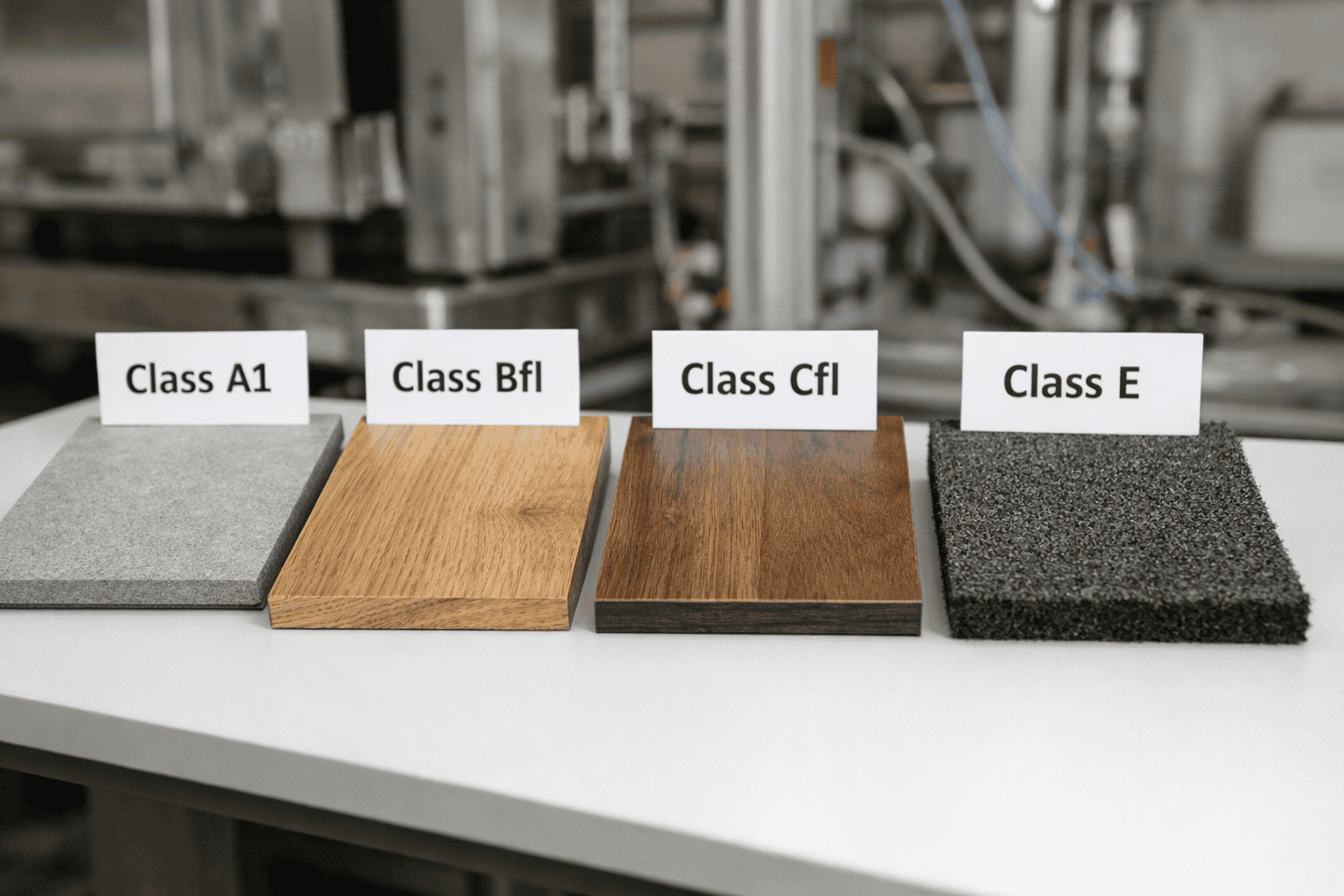
Certification does not rate slip resistance, fire performance, or durability, so it should sit alongside technical checks. For commercial projects, review environmental credentials as closely as safety and compliance documents, including flooring fire classifications where relevant.
How FSC Standards Track Wood from Forest to Finished Floor
Weak chain-of-custody controls can break certification before the flooring reaches site, which is why buyers should favour products with a clear, documented FSC claim on quotes, delivery notes, and packaging. That approach gives the cleanest audit trail from forest manager to mill, manufacturer, distributor, and retailer.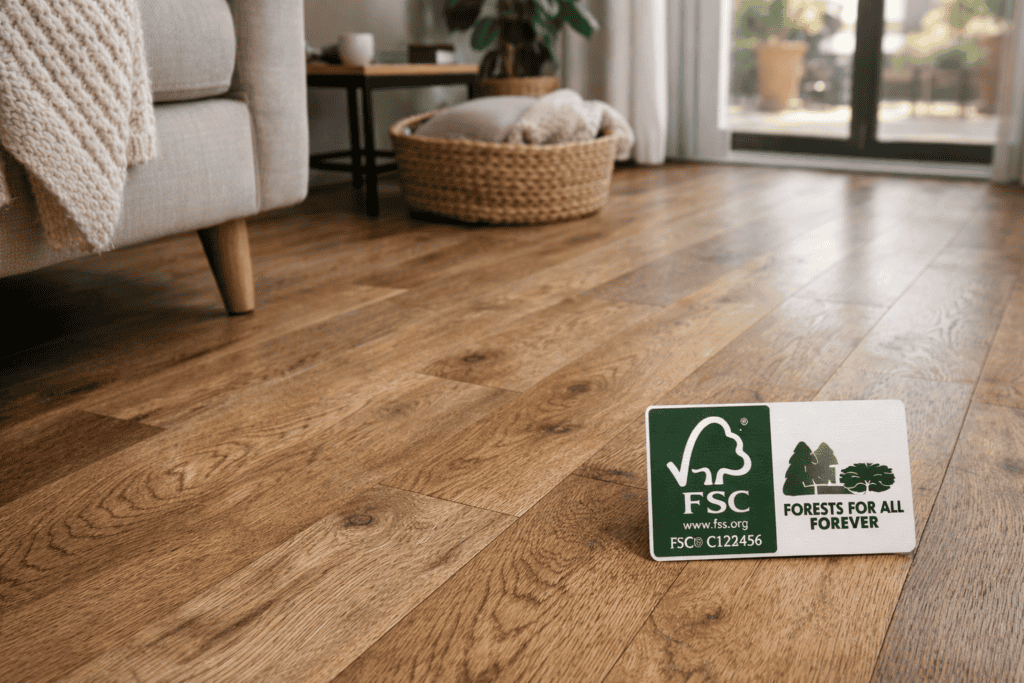
FSC standards work best when every business handling the wood holds valid chain-of-custody certification and records each transfer accurately. Each stage must identify the material, keep certified and non-certified inputs separate where required, and pass the correct claim forward. For flooring, that record often sits alongside batch details, product codes, and invoice references rather than on the board itself.
Alternative sourcing claims still appear in the market, including broad sustainability statements or supplier declarations, but they do not provide the same third-party verification. Recycled or mixed-source FSC products can still fit the brief when the specification allows them, provided the claim matches the project requirements. For commercial projects, confirm the paperwork early, especially where compliance records already cover related issues such as flooring fire classifications.
Why FSC Certified Flooring Supports Responsible Sourcing
- Supports responsible forest management and long-term stewardship
- Helps reduce the risk of illegal or destructive wood entering production
- Gives specifiers a firmer basis for environmental claims
- Can support procurement policies and green building requirements
- Improves sourcing credibility beyond a simple logo check
- Does not replace technical checks on wear layer, substrate, slip resistance or fire performance
- Loses value if buyers only check the logo and not the paperwork
- Certification can be broken if chain-of-custody controls fail before delivery
- The FSC claim still needs to match the project specification
Certification loses value when buyers treat it as a logo check, not a sourcing control. Responsible sourcing depends on forest management before timber reaches the factory, not just end-of-chain paperwork.
FSC standards set rules for harvesting rates, biodiversity, soil and water protection, legal land use, and safeguards for workers and local communities, including Indigenous rights where relevant. That shifts the focus from extraction to long-term forest stewardship.
In flooring, this supports a steadier raw material supply and lowers the risk of illegal or destructive wood entering production. It also gives specifiers a firmer basis for environmental claims, especially where projects must meet procurement policies or green building requirements.
The best results come from checking the FSC claim alongside product details. A certified board with the right wear layer, substrate, slip resistance, or fire performance still needs to suit the site, whether the project uses timber planks or specialist surfaces covered in guides such as what is safety flooring and flooring fire classifications explained.
How to Check Whether Flooring Is Genuinely FSC Certified
The most reliable check is the supplier’s valid FSC licence code matched to the product’s exact FSC claim.
Ask for three items before you buy: the product datasheet, the invoice or quote showing the FSC claim, and the supplier’s FSC licence number. Verify that number in the FSC certificate database. The certificate should be current, belong to the named business, and cover the product type.
Check that wording stays consistent across paperwork and packaging. Product names, species, board format, and claim wording should match. If the flooring is mixed or multilayer, confirm which wood-based parts are covered rather than assuming the whole product qualifies.
Do not rely on a green logo in a brochure or vague wording such as “sustainably sourced”. Those claims are not the same as certified status. A lapsed certificate, missing licence code, or paperwork naming a different company should stop the order until the supplier clears it up in writing.
Keep copies of the verified documents with the project file for procurement checks, client queries, and compliance reviews.
When FSC Certified Flooring Makes Sense for Homes and Commercial Projects
Specification risk falls and procurement gets easier when FSC certified flooring is matched to the project early. It fits best where timber origin affects planning standards, client requirements, ESG reporting, or public-sector tenders.
In homes, FSC certification helps when the brief values responsible sourcing alongside appearance, durability, and budget. That often applies to engineered wood, solid timber, and other wood-based floors where buyers want proof of source, not just a design finish.
Commercial projects benefit more directly because certification can support procurement policies, fit-out standards, and sustainability targets. Offices, schools, hospitality sites, and retail units often need material schedules that stand up to contractor, designer, and compliance review.
Use FSC certified flooring early in the specification process, not as a late substitute. Availability, lead times, product construction, slip resistance, and fire performance still need checking, especially in mixed-use schemes. For higher safety demands, safety flooring may suit some areas, while timber-look products cover others. If fire performance affects the spec, review flooring fire classifications before approval.
Frequently Asked Questions
What does FSC certified flooring mean?
FSC certified flooring comes from wood sourced under the Forest Stewardship Council’s standards. It shows the timber was harvested responsibly, with checks on forest management, biodiversity, and workers’ rights. Certification also tracks the wood through the supply chain to reduce the risk of illegal or poorly sourced material.
How does FSC certification help verify that flooring comes from responsibly managed forests?
FSC certification checks both the forest source and the supply chain. It confirms the timber was harvested under standards that protect biodiversity, water, wildlife and workers’ rights. Chain-of-custody tracking then follows the material through processing and sale, so the flooring can be traced back to a certified source.
What types of flooring can carry FSC certification?
Check the product details or packaging for an FSC claim before you buy. FSC certification can apply to solid hardwood, engineered wood, bamboo flooring, and some cork products when the wood or fibre comes from responsibly managed sources. It covers the certified material supply chain, not just the finished floor’s appearance.
How can buyers check whether flooring is genuinely FSC certified?
Only products sold with a valid FSC claim and certificate code count as genuinely FSC certified. Check the packaging, invoice, or product sheet for an FSC label and licence or certificate number. Then confirm that number matches the seller or manufacturer and covers the flooring product type.
Does FSC certified flooring affect quality, cost, or long-term value?
FSC certification tracks wood from forest to finished product; it does not set a separate performance grade. Quality still depends on species, construction, wear layer, and finish. Prices can be slightly higher, but certified flooring may hold stronger long-term value for buyers who want verified responsible sourcing.