Turning a garage into a home gym requires controlled insulation, durable flooring, and effective ventilation to create a safe, usable training space. The right setup depends on the garage’s structure, local climate, and the type of exercise equipment the room will hold. This guide explains how to insulate walls and doors, choose flooring that handles impact and moisture, and improve airflow to manage heat, condensation, and odours.
Key takeaways
- Inspect the slab, walls and door seals for damp, cracks, draughts and low spots.
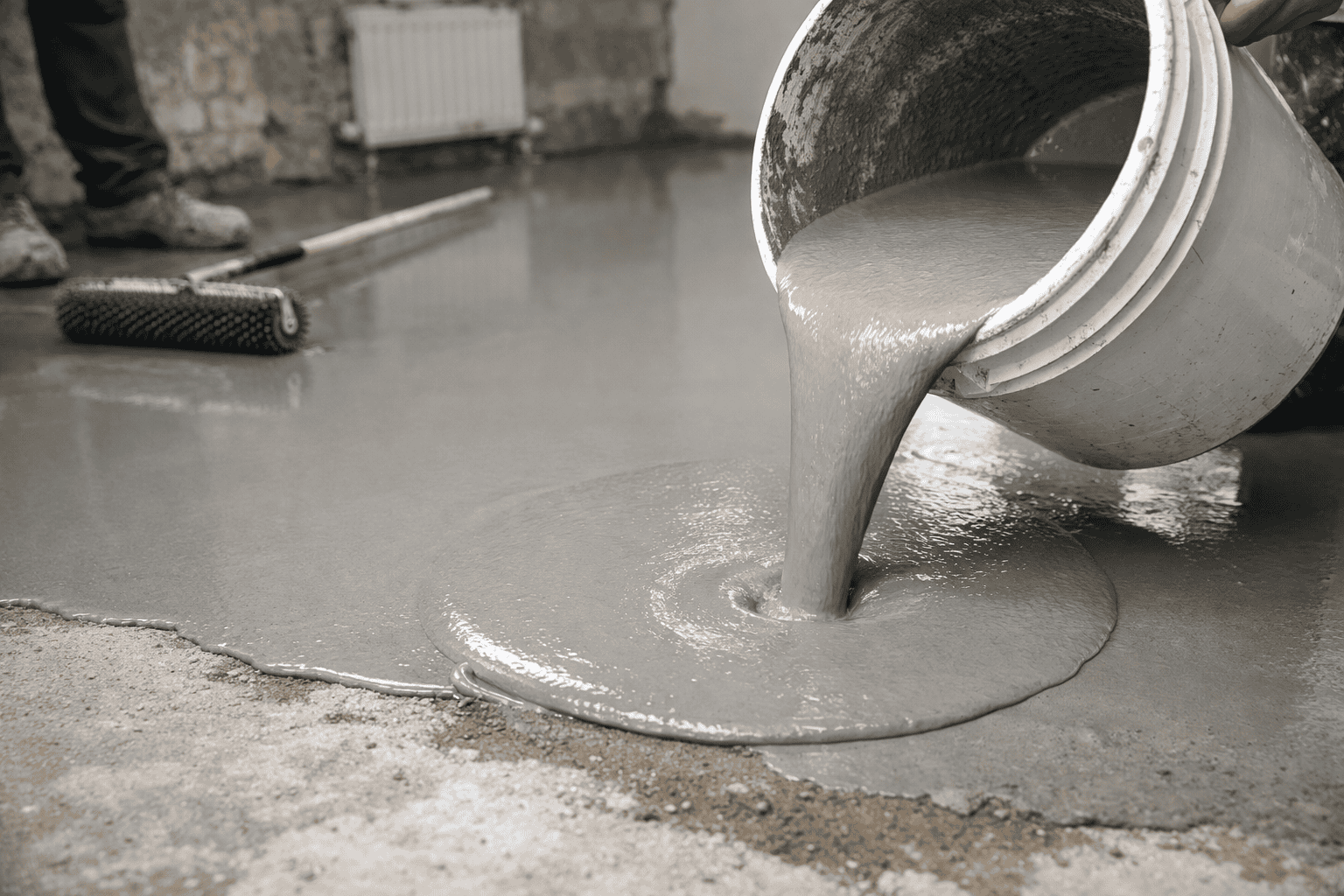
- Seal cold, unprotected concrete with a damp-proof treatment before fitting any gym flooring.
- Insulate walls and ceiling first, then upgrade the garage door to steady temperature and reduce noise.
- Use mineral wool in stud walls and ceilings for better sound absorption and thermal control.
- Choose dense rubber tiles or heavy-duty rubber rolls for concrete floors, racks and heavy equipment.
- Plan airflow before placing storage or machines, and keep clear of door tracks and swing.
- Grind ridges, fill hollows and check edge gaps and door clearance before laying the finish floor.
Assess the Garage Structure, Moisture Levels and Door Condition Before Any Gym Fit-Out
Check the slab, walls and garage door seal before buying gym flooring. Moisture and draughts shorten rubber tile life, trap odours and reduce insulation.
Inspect the floor for cracks, flaking concrete and dark patches that suggest damp or water ingress. Use a long straightedge to find low spots, since gym flooring needs a stable, level base. If the slab is cold and unsealed, apply a damp-proof treatment before fitting underlay or the final surface.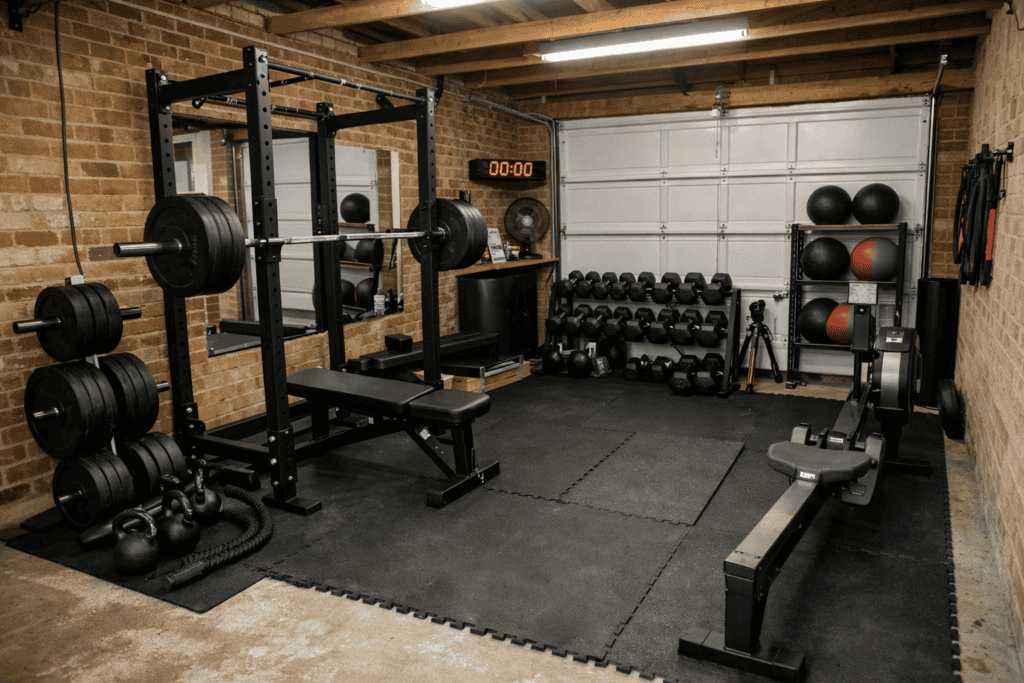
Inspect the walls and door next. Single-skin brick and thin metal up-and-over doors lose heat fast, which can affect adhesives and foam-backed flooring. Replacing worn seals and warped frames cuts draughts and helps ventilation manage moisture properly.
Match the flooring to the structure. Heavy rubber suits sound concrete, while engineered systems need stricter moisture control. If resale matters, flooring types affect home value in different ways, especially if a future buyer wants the garage back in general use.
Insulate Walls, Ceiling and the Garage Door to Control Temperature and Noise
- Adds insulation without using much space.
- Can improve the weakest part of the room envelope.
- Useful when the existing door is otherwise sound.
- Better if the current door rattles, leaks air or feels weak.
- Avoids overloading a door beyond the manufacturer weight limit.
- Often makes the room quieter and easier to heat.
Insulate the walls and ceiling before the floor. That does most to steady garage gym temperatures, cut echo and reduce noise through shared walls. Then upgrade the garage door with rigid foam board or an insulated replacement.
Broad, uninsulated surfaces usually lose more heat than the floor. Mineral wool suits stud walls and ceilings because it improves temperature control and absorbs sound better than thin foil-backed products. In attached garages, it also helps contain noise from weights, treadmills and speakers.
The garage door often needs separate treatment because it is usually the weakest part of the room envelope. Rigid foam boards between door rails add insulation without using much space, but the added weight must stay within the manufacturer’s limit. If the door rattles, leaks air or feels weak, an insulated sectional door is often the better fix.
Spray foam, insulated plasterboard and acoustic panels can help in specific layouts, but they work best after the main insulation is done. Keep ventilation clear around the room and door edges so the space stays dry and warm.
Choose Gym Flooring That Handles Concrete Subfloors, Impact Loads and Equipment Weight
| Flooring option | Best use in a garage gym |
|---|---|
| Dense rubber tiles | Good for most garage gyms on sound concrete where grip, impact control and compression resistance matter. |
| Heavy-duty rubber rolls | Suitable for larger training zones needing a stable, durable surface over a sealed and level base. |
| Soft foam mats | Not ideal on rough concrete or under racks, benches and dropped weights because they fail early. |
| LVT in lighter zones | Can suit cleaner multi-use areas, but free-weight sections still need dedicated rubber protection. |
Soft foam mats on rough concrete fail early under racks, benches and dropped weights. Use a sealed, level base, then fit a surface matched to the training load and equipment footprint.
Concrete passes moisture, dust and small height changes into the finished floor. That movement opens joints, rocks machines and concentrates loads under narrow feet. In most garage gyms, dense rubber tiles or heavy-duty rubber rolls give the best mix of grip, impact control and compression resistance. If the space also needs a cleaner multi-use finish, LVT Floor Installation suits lighter training zones, but free-weight areas still need dedicated rubber.
Set thickness by load, not appearance. Cardio and general exercise areas can use thinner systems, while squat racks, plate storage and deadlift stations need thicker rubber. Leave perimeter expansion gaps where needed, and use ramps or reducer strips at thresholds so the garage door clears the new floor.
Done properly, the floor feels stable, protects the slab from impact and gives heavy equipment a safer bearing surface.
Plan Ventilation, Airflow and Sectioning for a Safer and More Usable Training Space
Good airflow limits heat, moisture and stale air around heavy flooring, insulated walls and closed garage doors. Plan ventilation before fixing storage or equipment, so air can move across the garage without dead spots.
Keep the training area clear of the garage door swing, side tracks and manual release gear. If the door stays, seal the perimeter and leave opening clearance. If it rattles, leaks or lets in wind, an insulated sectional door often makes the room quieter and easier to heat.
Create a simple airflow path, with fresh air entering at one point and stale air leaving at another. A wall vent with an extractor fan suits many garages, especially where cardio work raises humidity. If windows are limited, fit a humidistat-controlled fan and keep stored items clear of intake and exhaust routes.
Avoid splitting the space into small zones unless each section still has ventilation and clear access. Poor partitions trap heat, hold odours and slow floor drying after cleaning. Keep access to the door, consumer unit and drainage points, and test the layout before permanent fixing.
Install the Floor in the Right Order With Subfloor Prep, Edge Detailing and Door Clearance Checks
Floor life improves, joints stay tight and the garage door keeps moving freely when subfloor correction comes before the finish layer. Grind ridges, fill hollows with a suitable levelling compound and remove dust before fitting adhesive, underlay or rubber. Small height changes telegraph through gym flooring, leaving racks rocking and tile edges taking repeated impact.
Set the perimeter detail next. Leave the expansion gap required by the manufacturer, then finish exposed edges with ramps or reducer strips where the floor meets the threshold or a retained storage zone. This stops edge curl, protects cut lines and reduces trip points when moving benches, plates or cardio kit.
Check door clearance before the final bond. Up-and-over doors, tracked sectional doors and threshold seals need space that thick rubber can reduce. Measure the finished floor build-up, then confirm that the door opens, closes and seals without dragging. If the existing door is worn, poorly aligned or due for replacement, Garage Doors King’s Lynn can assess whether the opening, frame and door set still suit the new floor height.
Frequently Asked Questions
What type of flooring works best for a garage home gym with heavy weights and cardio equipment?
Dense rubber flooring works best. Use 10-15 mm interlocking rubber tiles or rolled rubber for strong impact protection, grip and noise control under heavy weights. For deadlifts or very heavy racks, add a lifting platform or thicker mats in key areas. Cardio machines also sit more securely on rubber than on bare concrete.
How should a garage be insulated to keep a home gym comfortable throughout the year?
Insulating the door alone is not enough. Treat the garage like a small room: insulate the walls, ceiling and door, then seal gaps around the frame to stop draughts.
Use rigid foam or mineral wool between studs, add a vapour control layer where needed, and finish with plasterboard. If the floor feels cold, fit rubber gym flooring over insulated subfloor panels.
What ventilation setup helps control heat, moisture and odours in a garage gym?
Install a humidity-sensing extractor fan with a wall vent, then add a window or louvre vent for fresh air intake. This creates steady air movement, which helps clear heat, sweat moisture and stale smells. If the garage stays damp, use a dehumidifier to keep condensation under control.
How can a garage be sectioned effectively to create a safe and practical gym area?
Keep a clear route to the door and any stored items before placing equipment. Zone the space by use: strength training near the strongest wall, cardio where headroom and airflow are best, and stretching in an open area. Use rubber flooring, wall storage, and marked walkways to reduce trip risks.
Do garage doors need to be upgraded or sealed when converting a garage into a home gym?
Up to 20% of heat loss in an attached garage can come through the garage door if it is thin or poorly sealed. For a home gym, fit weatherstripping around the frame and a bottom seal at minimum. Upgrade to an insulated door if the existing panel is single-skin metal, warped or draughty.