Damp coming through floor slabs is a common UK problem, especially in older homes and garages. Moisture can rise through concrete by capillary action, then show as dark patches, musty smells, or lifting vinyl and laminate.
This guide explains how to diagnose the cause and choose the right fix, from installing a damp proof membrane for concrete floor repairs to applying a liquid DPM UK system. It also covers preparation steps that help coatings bond and stay effective.
Key takeaways
- Identify whether moisture is rising damp, condensation, or a plumbing leak.
- Check for missing or failed damp proof membrane under the concrete slab.
- Improve drainage outside by lowering ground levels and clearing blocked gullies.
- Seal cracks and joints before applying any floor moisture barrier system.
- Use a suitable epoxy damp proof membrane when the slab stays persistently damp.
- Allow new concrete to dry fully before laying vinyl, laminate, or timber flooring.
Diagnose the Source: Rising Damp, Condensation, Leaks, or Groundwater Pressure
BS 8203 sets a common moisture limit of 75% relative humidity (RH) for resilient floor finishes, while BS 5325 uses 75% RH for timber floors. If a slab tests above 75% RH, damp coming through floor finishes is likely, and adhesives can fail.
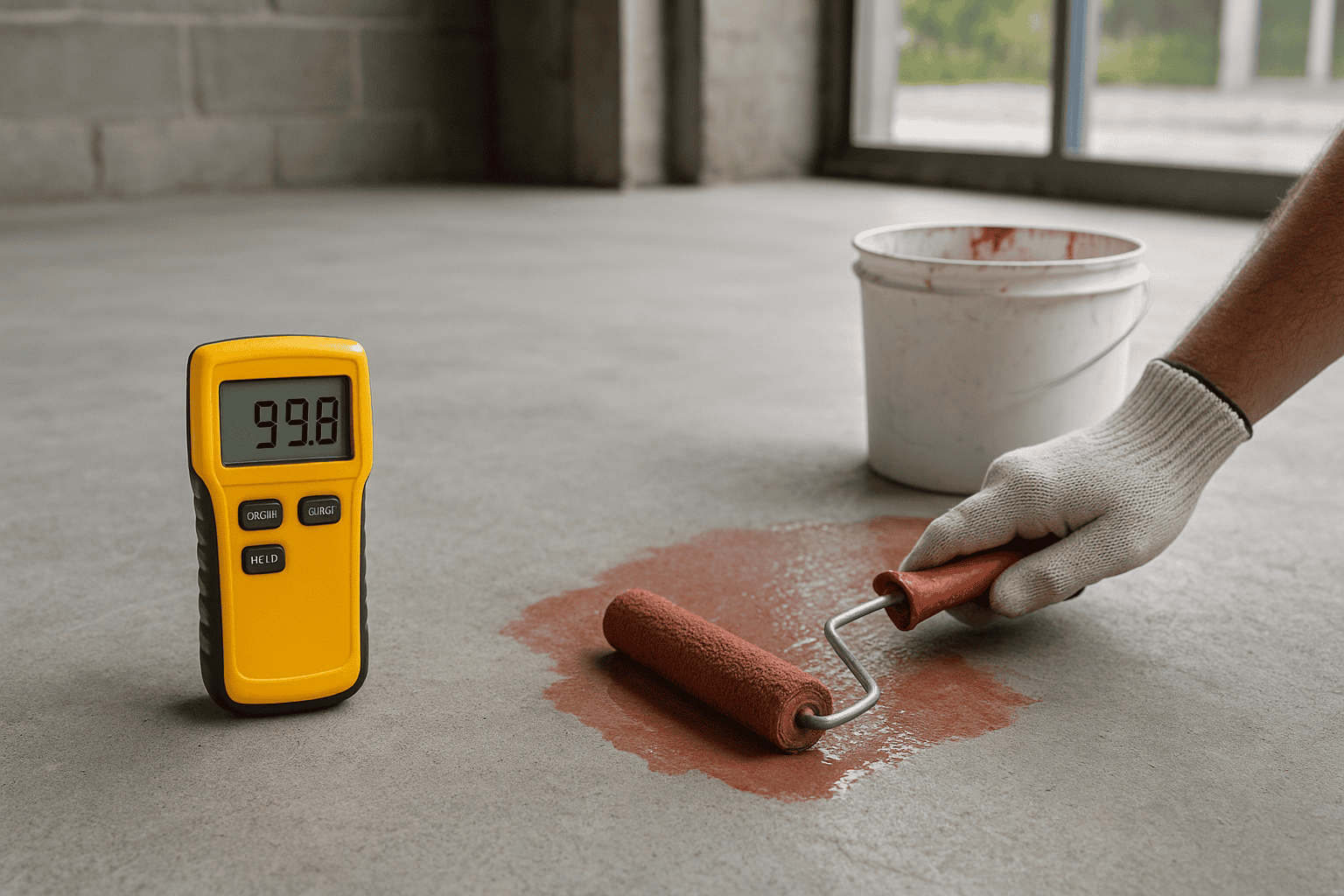
Start by diagnosing the moisture source before choosing a damp proof membrane for concrete floor. Use an in-situ hygrometer test (sealed hood) to measure RH at the slab surface, not the room air. Many contractors treat 75% RH as the pass point for most coverings, while some systems allow installation up to 95% RH when you use a compatible liquid DPM UK product.
Rising damp usually shows as persistent moisture at the perimeter and can link to missing or bridged DPCs in walls. Condensation tends to track cold spots and spikes in winter, even when the slab itself tests below 75% RH. Plumbing leaks often create localised wet patches that stay wet after ventilation improves. Groundwater pressure can push moisture through cracks and joints, and readings may remain high across the whole slab.
If symptoms overlap, compare patterns against common flooring problems in older UK homes. For treatment context, contractors often quote roughly £25–£60 per m² for a liquid DPM (prep dependent), while sheet membranes can cost less in materials but more in labour where detailing is complex.
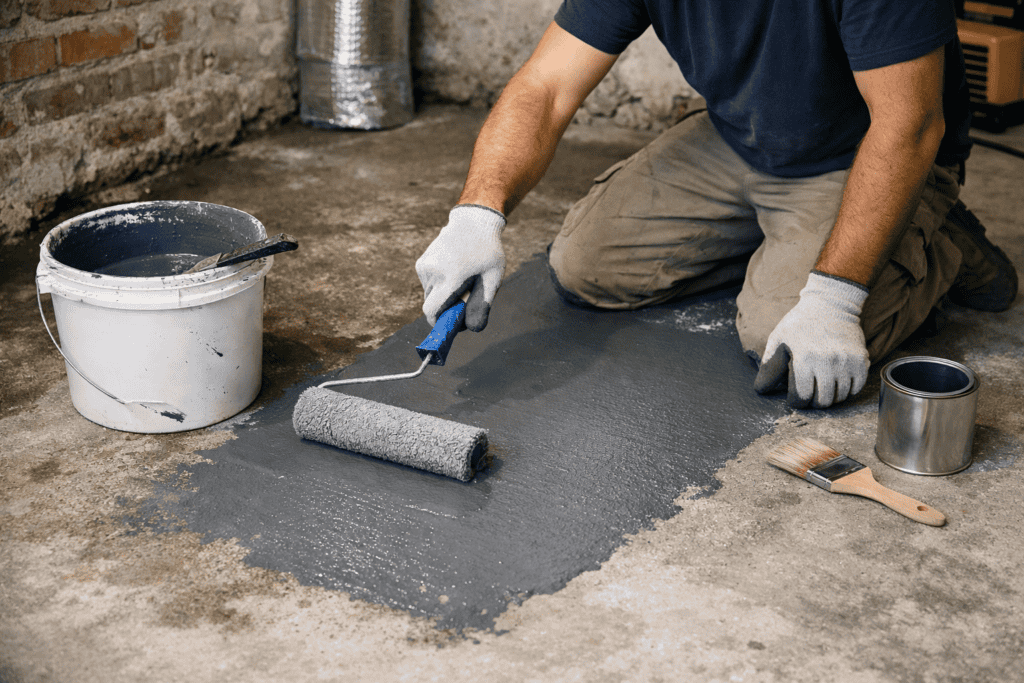
Test Moisture Properly: Hygrometer Method, RH Thresholds for Floor Coverings, and When to Stop
A homeowner lifts vinyl tiles in a ground-floor hallway and finds dark patches and a musty smell. Before any liquid DPM UK product goes down, the slab needs a proper moisture test, not a quick “touch test”.
Use the in-situ hygrometer method: drill the slab to the correct depth, insert a sleeve, seal it, then let the probe equilibrate before reading relative humidity (RH). This approach aligns with BS 8203 and BS 5325, which commonly use 75% RH as a limit for many floor coverings.
- Stop and treat if results sit above the flooring limit (often 75% RH): expect adhesive failure and damp coming through floor finishes.
- Retest after drying measures or repairs; do not rely on one reading.
- Choose the system: a sheet damp proof membrane for concrete floor suits major refurbishments; a liquid DPM suits constrained thresholds, but only when the RH level matches the product specification.
Contractors often price testing as a separate visit, then quote treatment based on area and preparation, so clear RH results help you avoid paying for the wrong fix.
Choose the Right Damp Proof Membrane for a Concrete Floor: Sheet DPM vs Liquid DPM (UK)
Sheet DPM and liquid DPM both block moisture, but they suit different problems. A sheet membrane works best when you can expose the slab and build a full floor system. A liquid DPM UK coating suits refurb jobs where you need a thin barrier under new finishes.
| Factor | Sheet DPM | Liquid DPM |
|---|---|---|
| Best use | New floors or full strip-out | Existing slabs before floor coverings |
| Weak point | Joints, laps, and penetrations | Prep errors and thin spots |
| Build-up | Thicker; often under screed | Thin; applied to slab surface |
| Typical contractor pricing | Often higher due to strip-out and reinstatement | Often lower for coating-only work |
For damp coming through floor finishes, choose based on access and risk. If you can re-form the floor, a sheet DPM gives a continuous layer under screed. If you must keep levels low, a liquid DPM can work, but only after thorough grinding, crack repair, and priming to the product spec.
Confirm the slab meets the floor finish limit (often 75% RH under BS 8203) before laying adhesives or timber systems.
Prepare and Treat the Slab: Cleaning, Crack Repairs, Primers, and Compatible Screeds/Adhesives
Even with a suitable DPM, damp can still come through floor finishes if the slab surface is dusty, weak, or cracked. Small cracks can carry moisture, and laitance (a soft cement skin) can stop primers, liquid DPM UK coatings, and adhesives from bonding.
Mechanically clean the slab: remove paint, old adhesive, and loose screed, then vacuum to a dust-free finish. Chase and fill cracks with a compatible epoxy or polymer repair mortar, and treat joints to limit movement through the new floor. Use the primer specified by the DPM or smoothing compound manufacturer; mismatched primers often cause pinholes and debonding.
Choose a screed and adhesive rated for the measured RH and for use over a DPM system. Contractors often price prep and moisture treatment together, from a few hundred pounds for small rooms to several thousand for whole ground floors, depending on grinding, repairs, and floor area. If you are planning floor fitting for new homes, confirm slab curing time and compatibility before installation.
Costs and Contractor Expectations: Typical UK Pricing Bands, Timescales, and Guarantees
UK contractors often price damp-proofing work by area, with many quoting per m² once access and preparation are clear. Expect a site visit to confirm the slab build-up, measure moisture, and agree the finish build-up before any damp proof membrane for concrete floor work starts.
For testing, many firms charge a separate call-out for in-situ hygrometer checks, because readings need time to stabilise. A typical expectation is 24–72 hours for the test to equilibrate, then a written result showing the slab’s relative humidity (RH). If the slab sits above the common 75% RH limit referenced in BS 8203, contractors usually treat the job as a moisture-management project, not a cosmetic repair.
Timescales depend on the system. A liquid DPM UK coating can often be applied in 1 day, but curing and overcoating windows can push the programme to 2–3 days before floor finishes go down. A sheet DPM with new screed typically takes longer, because screeds need drying time before adhesives and coverings can tolerate the moisture load.
Guarantees vary. Many installers offer 10–20 year product-backed warranties when the specification matches the test results and the full system (primer, DPM, screed, adhesive) stays within one manufacturer’s approvals.
Frequently Asked Questions
How can you confirm whether damp is coming through a concrete floor using hygrometer testing in the UK?
Use a calibrated hygrometer hood test (BS 8203/BS 5325 method). Seal the hood to the concrete for at least 72 hours, then record relative humidity (RH). Readings above about 75% RH indicate excess moisture and likely damp coming through floor. Confirm with two to three tests across the room, including near external walls.
What relative humidity (RH) readings are typically considered too high to install floor coverings over a concrete slab?
Most floor covering makers treat sustained readings above 75% RH (measured in-situ) as too high for direct installation. Many resilient floors and adhesives need 65% to 75% RH, depending on the system. If tests show 75% RH or higher, damp coming through floor is likely, so use a damp proof membrane for concrete floor or a liquid DPM UK.
What are the most common causes of damp coming through a concrete floor in UK homes?
Common causes include a missing, damaged, or poorly lapped damp proof membrane for concrete floor; bridging from screed, insulation, or wall plaster; high external ground levels; cracks and construction joints letting moisture track up; and hydrostatic pressure from a high water table. In UK homes, failed or unsuitable liquid DPM UK products can also leave damp coming through floor.
When should you use a liquid DPM in the UK instead of a sheet damp proof membrane for a concrete floor?
Use a liquid DPM UK when you cannot fit a sheet damp proof membrane for concrete floor, or when damp coming through floor needs a continuous seal around edges and penetrations. It suits uneven slabs, small rooms, and patch repairs. Use a sheet membrane on new builds or when you can lap and tape joints reliably.
What pricing bands do UK contractors typically quote for diagnosing damp and installing a liquid DPM on a concrete floor?
UK contractors often quote a call-out and diagnosis fee of £80–£250 for damp coming through floor checks. For a liquid DPM UK application, typical bands are £25–£60 per m² for preparation and coating. If the floor needs repairs or a new damp proof membrane for concrete floor, quotes often rise to £60–£120+ per m².