Luxury vinyl plank, cork, and carpet are the most forgiving flooring options for uneven subfloors. Their flexibility and underlayment compatibility help them bridge minor surface irregularities without extensive preparation. Rigid materials such as ceramic tile and solid hardwood need a flat, stable base. If laid on uneven surfaces, they will crack or gap over time. This article covers which flooring types tolerate subfloor imperfections, the thresholds each product can handle, and how underlayment selection affects the final result.
Key takeaways
- Subfloor deviation beyond 3/16 inch over 10 feet voids most flooring warranties.
- Luxury vinyl plank and sheet vinyl handle minor irregularities better than any rigid material.
- Most LVP products accept up to 3/16 inch variance per 6-foot span.
- Self-levelling compound corrects low spots without replacing the full subfloor.
- A 6mm cork underlayment spreads weight more evenly than a 3mm foam pad.
- Stacking multiple underlayment layers makes planks flex and damages locking mechanisms.
- A floor that bounces underfoot signals joist damage and needs professional assessment before installation.
Why Uneven Floors Cause Flooring Failures and What Counts as Acceptable Variation
Check your subfloor’s flatness before you choose any flooring product. A deviation greater than 3/16 of an inch over a 10-foot span falls outside the tolerance accepted by most manufacturers, and installation over it typically voids the warranty.
Rigid materials usually fail first on uneven surfaces. Ceramic tile cracks at high spots when it loses contact with the substrate. Laminate planks can gap or peak at joints when the boards beneath them bow. Luxury vinyl tile can hollow out and pop loose where the subfloor rises and falls sharply.

The National Wood Flooring Association sets the 3/16-inch-over-10-foot standard for hardwood, and most vinyl and laminate manufacturers follow it. Some thicker luxury vinyl planks require 3/16 inch over 6 feet, which is a stricter threshold. Always check the installation guide for the specific product, not just the product category.
Which Flooring Types Tolerate Uneven Subfloors Best
Luxury vinyl plank (LVP) and sheet vinyl handle minor subfloor irregularities better than any rigid material. Their flexible core follows slight dips and rises, without cracking at joints or lifting at edges. Most LVP products tolerate up to 3/16 of an inch variance per 6-foot span. Thicker wear layers with attached underlayment improve this further. Lino flooring offers comparable flexibility, and its dense construction reduces surface telegraphing over time.
Carpet is the most forgiving across all subfloor conditions. Foam or fibre underlay bridges gaps and cushions pressure points that would crack harder materials. Carpet tiles add a practical advantage. Individual tiles can replace worn sections without disturbing the surrounding floor.
Engineered wood sits between rigid and flexible categories. Its layered construction resists warping better than solid timber, but it still requires a surface flat to within 3/16 of an inch over 10 feet to prevent joint stress. It suits mildly uneven subfloors, not severely undulating ones.
Self-Levelling Compound and Low-Profile Prep Methods Worth Considering
Skipping subfloor prep is the most common reason flexible flooring fails within the first year. LVP and sheet vinyl can handle minor irregularities, but dips or ridges beyond their tolerance cause visible deflection and put stress on joints over time.
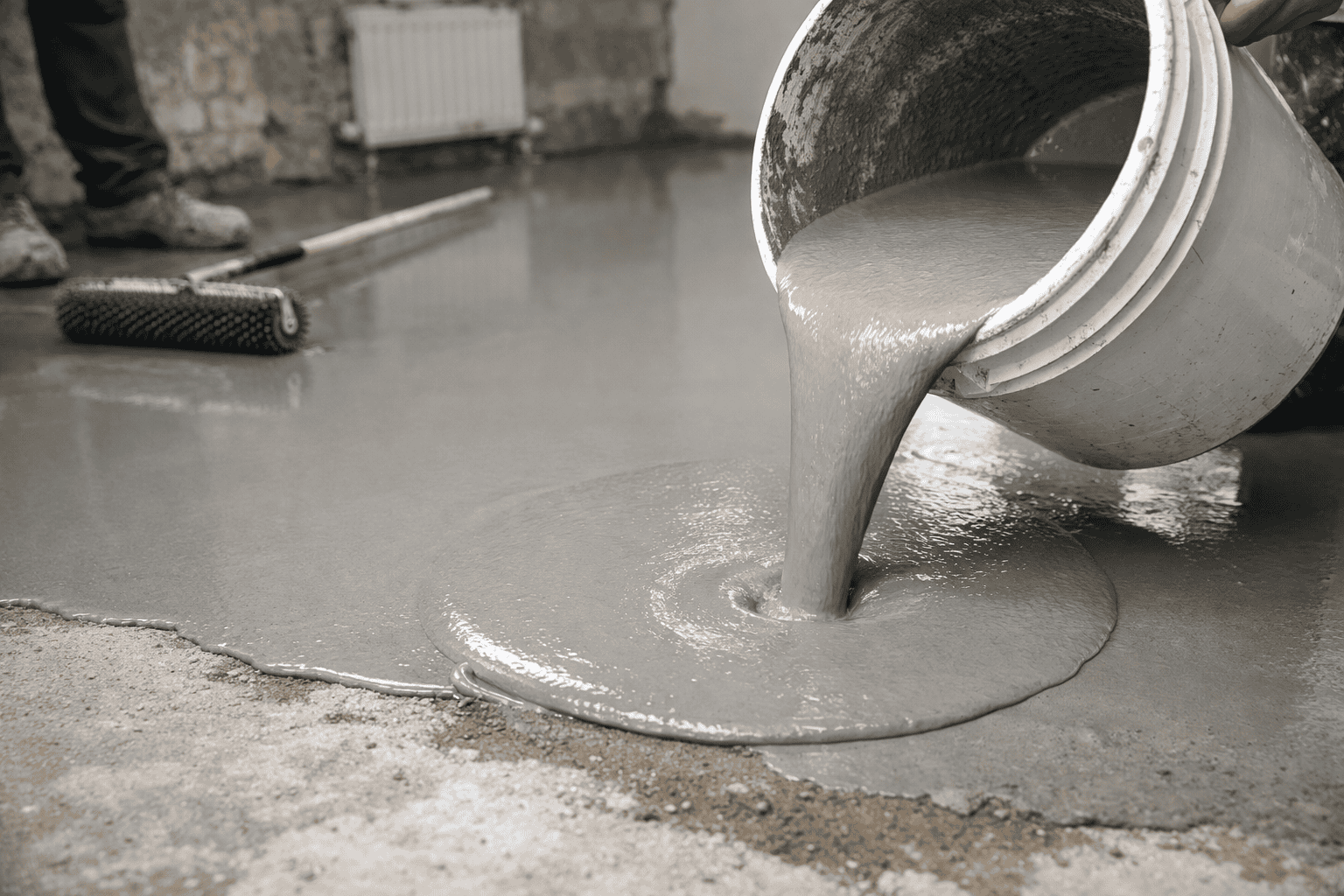
Self-levelling compound fixes low spots without replacing the full subfloor. When mixed to a pourable consistency, it flows into depressions and cures flat within two to four hours. Most compounds handle pours up to 25mm. Anything deeper needs layered applications to prevent cracking. High spots need a grinder or scraper on concrete, or a belt sander on timber. Pronounced flex must be addressed at joist level before surface work begins.
LVT flooring laid over a properly levelled surface resists edge lifting and click-lock separation far better than the same product on an uncorrected base. Where self-levelling compound is impractical, feather-finish smoothing compound can achieve comparable flatness for light residential loads when applied in thin coats.
Installation Techniques That Compensate for Minor Subfloor Irregularities
- Click-lock planks rest on underlayment that absorbs minor height variation
- 6mm cork can spread weight more evenly over isolated low points than 3mm foam
- Useful where the subfloor is only mildly irregular
- Stacking multiple underlayment layers increases flex at the joints
- Too much lift above the subfloor accelerates wear on the locking mechanism
- It does not solve bigger flatness or structural problems
Floating installation locks planks together at the joints and rests them on foam or cork underlayment. That underlayment absorbs minor height variations. A 6mm cork underlayment spreads weight more evenly over isolated low points than a 3mm foam pad. Avoid stacking multiple underlayment layers, because planks that sit too high off the subfloor flex at the joints and accelerate wear on the locking mechanism.
For glue-down installations, match the notched trowel to the adhesive manufacturer’s specification. A trowel that is too fine leaves air pockets. One that is too coarse applies excess adhesive, which compresses unevenly. Feather-finish any remaining ridges with a floor-grade patching compound before spreading adhesive, as a thin skim coat flattens surface texture faster than a full self-levelling pour.
Stagger plank end joints by at least 6 inches between rows. When joints align, they concentrate stress at a single cross-point and increase the risk of peaking on uneven subfloors. Some LVP products require 8 or 12 inches to maintain warranty coverage, so check manufacturer guidelines before laying the first row.
When the Subfloor Condition Rules Out a DIY Fix
Self-levelling compound can correct low spots, but it cannot fix a structurally unsound subfloor. Boards with significant rot, persistent moisture intrusion, or widespread delamination will continue to flex after surface prep. That movement can cause flooring to fail at the joints within months.
A floor that bounces or feels soft underfoot usually points to joist damage or subfloor sheeting that has lost its bond. If you lay LVP or sheet vinyl over that movement, the flex transfers directly into the flooring above. This can break locking mechanisms or split glued seams.
Localised rot can sometimes be patched with new plywood instead of requiring full replacement. A structural engineer or experienced flooring contractor can determine which approach is needed. Skipping that assessment typically costs more, because failed flooring still requires removal and reinstallation after the subfloor work.
Timber subfloor moisture above 12% exceeds the threshold most manufacturers specify. No surface prep method can stop the expansion and contraction that follow. Use a calibrated moisture metre and fix the source before committing to any product.
Frequently Asked Questions
What type of flooring works best over slightly uneven floors without replacing the subfloor?
Luxury vinyl plank is the most forgiving option. It can float over minor dips and rises, so the surface does not need to be perfectly flat. Engineered wood and laminate with attached underlayment also work well, provided the variation stays within 3/16 of an inch over a 10-foot span.
Can vinyl plank flooring hide minor floor unevenness better than laminate or hardwood?
Vinyl plank handles minor unevenness better than laminate or hardwood. Its flexible core can conform slightly to surface variation. Rigid laminate and hardwood transmit those imperfections upward, which can cause visible gaps or hollow spots. Most vinyl plank products tolerate subfloor variation of up to 3/16 inch per 10 feet without requiring additional prep work.
How uneven can a floor be before self-levelling compound or subfloor repair becomes necessary?
Use self-levelling compound if dips or rises exceed 3mm over a 1.8-metre span. Most rigid flooring products, including laminate and LVT, specify this tolerance in their installation guidelines. Above that threshold, the floor can flex, joints can fail, and the manufacturer’s warranty may be void.
Which flooring options are least likely to crack, separate or wear unevenly on an imperfect subfloor?
Flexibility matters most when the subfloor has dips or ridges. Luxury vinyl plank (LVP) and sheet vinyl can absorb minor movement without cracking or separating. Rigid laminate and ceramic tile are more vulnerable because both need a flatter surface to perform reliably over time.
What should be checked before installing new flooring over an uneven floor without major subfloor work?
Gaps or dips exceeding 3/16 of an inch over a 10-foot span will cause most floating floors to fail prematurely. Before you lay anything down, check for moisture with a plastic sheet test. Confirm that the subfloor is also structurally sound, since soft spots, squeaks, or loose boards need fixing regardless of which flooring you choose.